By Natasha Weith
Market research is often designed to answer specific business questions, such as how a product compares to the competition or what new features consumers desire. While this information helps guide important business decisions, it does not really help brand teams to truly know their consumer target. To connect with consumers on a deeper level, brand teams must move beyond understanding what is in their consumers’ heads (how they think) and delve into what is in their hearts (how they feel and their underlying motivations.)
The Importance of Empathy
Empathy is the key to unlocking this deeper understanding. It is the ability to understand and share the feelings of another person. It involves not only recognizing what someone else is going through but also being able to emotionally connect with their experience, as if you were in their situation. Empathy fosters compassion, support, and meaningful relationships.
In a business context, it is about going beyond data points or demographic segments to genuinely connect with consumers’ experiences and feelings. By building empathy, marketers and R&D teams can cultivate a more intuitive grasp of consumer needs, enabling them to make decisions that not only meet consumer expectations but anticipate them.
Building Consumer Empathy
Most of the time, marketers are not their own target consumers so they must spend time with them to truly understand their lives, values, hopes, challenges, and behaviors. The goal should be to move through the following spectrum to genuinely empathize with your consumer target.
The Empathy Trek: Walking in Your Consumer’s Shoes
Building consumer empathy requires more than traditional research methods. It calls for what we like to refer to as "empathy treks." Unlike typical market research, which is focused on specific business objectives, an empathy trek is a more immersive and observational approach focused solely on getting to know the consumer. The goal is not to gather data for immediate business decisions but to develop a profound understanding of the consumer target.
An empathy trek involves spending time with your consumers in their natural environments. It means observing how they live, understanding what they value, exploring their beliefs, and witnessing their behaviors firsthand. This exercise helps brand teams to “walk in their shoes” and “feel what they feel,” leading to a more holistic understanding of their lives.
For example, if your target consumers are busy parents, an empathy trek might involve spending time in their homes during the weekday morning rush, observing how they juggle responsibilities, and understanding the emotional pressures they face. This experience can reveal insights that traditional research might miss, such as the stress points that influence purchase decisions or the small moments of joy that a brand could tap into.
The Value of Empathy in Brand Management
So, why is building empathy for your consumer target so critical? The benefits are numerous and can transform the way brand teams approach decision-making.
Let SIVO Guide your Path to Consumer-Centric Success
In a world where consumers are increasingly seeking brands that understand and resonate with their values, building empathy is not just a nice-to-have; it’s a necessity. Brand teams that invest in understanding their consumers at a deeper, more emotional level will be better equipped to create meaningful connections that stand the test of time.
As an insights partner, it is SIVO’s responsibility to champion empathy with our clients. By advocating for empathy treks and encouraging client teams to walk in the shoes of their consumers, we can help you build brands that not only meet consumer needs but also win their hearts.
Contact us at Contact@SIVOInsights.com or visit SIVOInsights.com to schedule a discovery call and connect to your consumers!
by Brent Budke
In today’s economy and remote working environment, there is much discussion about the need for a fractional workforce. The U.S. Chamber of Commerce notes that fractional hiring began in the academic world but then expanded to small start-up businesses that were looking to fill skill gaps. Now it has become just as important in larger companies that can’t afford the loss in business momentum that often coincides with open positions.
What is a fractional employee?
Fractional employees (or what we refer to as SIVO On Demand Talent) are typically Professionals or Specialists with unique or advanced skillsets, that only work for a set number of hours per week and/or for a finite timeframe. This can be beneficial for the employer as the company only pays an hourly rate for the agreed-upon time per week that the Professional works. Engagements can be 10 to 40 hours per week for a specific timeframe, such as, 2 months, 6 months, or a year.
This type of engagement can also benefit the fractional professionals who prefer to only commit to working shorter time frames or prefer to divide their time across multiple employers. For instance, a fractional employee might work 2 days a week at one company and 2 days a week at another non-competing company to enjoy a 4-day workweek. Having specialized skills or valuable work experience tends to make fractional professionals attractive to employers who might not need or can’t afford a full time, permanent employee.
Today’s work environment makes this scenario even more attractive as companies have learned to function with employees working remotely, which gives them a broader pool of fractional professionals to choose from.
THREE KEY BENEFITS OF FRACTIONAL EMPLOYEES:
1. Maintain momentum without burning out current employees
We’ve all experienced the pain of doing your own job and covering for another team member who is taking a needed leave-of-absence or has left the company. It often creates a surge in workload for supervisors or for teammates when the business cannot afford to slow down or pause critical business initiatives. Open roles can cause remaining team members to be overworked or overwhelmed, leading to mistakes and eventual burn-out. Fractional or temporary employees can be a great solution to keep the business running, to cover temporary openings and to allow the normal hiring process to play out.
SIVO Note: Hiring fractional insights professionals is even easier if SIVO is already on your company’s “approved vendor” list. Our first step would be to meet with you to understand your business, key needs, and focus areas. From there, the SIVO On Demand Talent team will create a personalized approach to match the optimal talent to the business needs to ensure success.
2. Gain immediate expertise - No training necessary
It can take months to find, hire and train the talent you need to fill open roles. Hiring fractional employees can help you move forward quickly and right-size your talent, getting a person in place within a week or two vs the months needed for a typical hiring process. Additionally, the beauty of fractional on demand talent is that they have already been vetted and assessed for certain skill sets and expertise, so no training is needed. Lastly, experienced fractional professionals can bring a fresh perspective and new approaches to your team and projects.
SIVO Note: SIVO On Demand Talent team leverages our extensive pool of fractional insights professionals with years of experience and expertise across an array of industries such as, CPG, Healthcare, Financial, Technology, Apparel, and Retail. Whether you need an Insights Associate to execute research projects or an Insights Director to help teams develop strategy and design learning plans, we can match the right talent to your unique needs.
3. Save the company money by focusing on specific business needs
Because fractional employees are typically classified as contractors for the purposes of payroll and taxes, employers don’t have to deal with costs associated with the hiring process nor the costs of typical benefits, such as health insurance or 401k contributions. That saves the company time and money while still staffing teams with highly qualified professionals. Below is a high-level comparison for fractional Insights Talent vs Full-time Insights employees:

SIVO Note: The advantage of working with SIVO for fractional insights professionals is that our team has access to a full-service consumer insights agency for ad-hoc resources, tools, and consultation.
We’d love to talk to you about your needs and how we can match the right talent to quickly make an impact in your business. Please contact us at OnDemandTalent@SIVOInsights.com or visit our website at SIVOInsights.com.
by Julie Rose
Did somebody say recession? Unfortunately, recessions are a normal part of the business cycle. There are periods of economic growth and periods of economic slowdown. During a recession, the economy slows, companies struggle with sales, people lose their jobs, and the stock market suffers. The point where the economy officially falls into a recession depends on multiple factors, but many experts indicate that two consecutive quarters of decline in Gross Domestic Product (GDP) is a sign of recession. The recession in 2020 occurred when the pandemic impacted our economy. The Great Recession in 2008 was caused by the collapse of the housing market. We are seeing signs for the next recession too, with some experts predicting late 2022 or early 2023. According to the Washington Post, the economy contracted in the first three months of 2022, by shrinking at a 1.4 percent pace.
Source: https://www.washingtonpost.com/business/2022/05/19/recession-economy-markets/
One common result of recession is that unemployment rises. Companies sometimes employ “hiring freezes” to maintain profits, while they wait for the economy to stabilize. This puts stress on the rest of the workforce so companies must look for ways to protect their current employees from burnout while also ensuring the most critical work gets done.
It’s common for businesses today to look for creative ways to expand their bandwidth to continue to achieve short and long-term goals. For companies that don’t want to make the long-term commitment of hiring full-time employees or are trying to conserve budgets, hiring temporary or “on demand” professionals is a low-risk, cost-effective option.
Recession-Proof Insights Talent from SIVO On Demand Talent
SIVO On Demand Talent can help with skilled Consumer Insight and Market Research Professionals that ease your team’s workload and help you achieve your business goals while also relieving you of the financial risk that is common during a recession.

We offer flexible solutions, like short or long-term assignments for fill-in roles or finite projects. Additionally, we can serve as an extension of your internal Consumer Insights Team, what we like to call your “back-pocket” consultants. For some clients, our talent serves as the virtual CI team, supporting initiatives in a cost-effective way while also ensuring high quality insights.
SIVO On Demand Talent offers far more flexibility than full-time employee expansion. Plus, you don’t have to spend your valuable time searching for, hiring, and training talent. We take care of it all for you, freeing you from the burden of a lengthy process.
Let SIVO help you manage through the ‘hiring freeze” by temporarily meeting your Insights, Analytics or Market Research talent needs.
Reach out to ondemandtalent@sivoinsights.com for a consultation.
Every business has customers, but how well they know their customers is another question. In a recent Harvard Business Review blog, Peter Merholz explains that many large companies lose that vital interaction with their customers as their business begins to grow.
“Business cannot exist without customers, so it’s sadly ironic that many, if not most, businesses, actually understand so little about them,” says Merholz. “In order to become customer experience-driven, you need to go beyond who your customers are, and understand what they do.”
While it may feel tempting to place your customers into simple, definable categories, Merholz urges companies to dig deeper and understand their customers as real people living in a messy, complicated world. What does that mean for your company? It means going beyond the high-level data and seeking to understand and appreciate your customer’s behavior and true motivation.
Trending
Do customers want to ‘hire’ your product?
Through SIVO On Demand Talent or with SIVO custom qualitative research, our clients uncover the underlying motivations behind their customer’s unique behavior. With SIVO On Demand Talent, we have storytellers who mine existing research to bring our clients’ customers to life. And, we ensure the next phase of research fills a customer knowledge gap, extending our clients’ research budgets. With SIVO custom research, our clients tap into valuable customer insights through approaches like In-Store Intercepts, Shop-Alongs, and Ethnographic research, to gain clear, in-depth analysis of their customer in the context of their daily lives.
How well do you know your customer? Maybe it’s time to take a deeper look…
Contact us at Contact@SIVOInsights.com for more information and next steps.
As customer needs evolve and competition intensifies, traditional segmentation frameworks often fall short. Many segmentation models are based on demographics and psychographics, and often define customers based on traits such as their age, gender, attitudes and values. They tell you who your consumer is – but not why they make the choices they do.
To fuel meaningful, strategic growth, businesses need more than demographic snapshots. They need contextual insight. This is where frameworks like Demand Space thinking comes in.
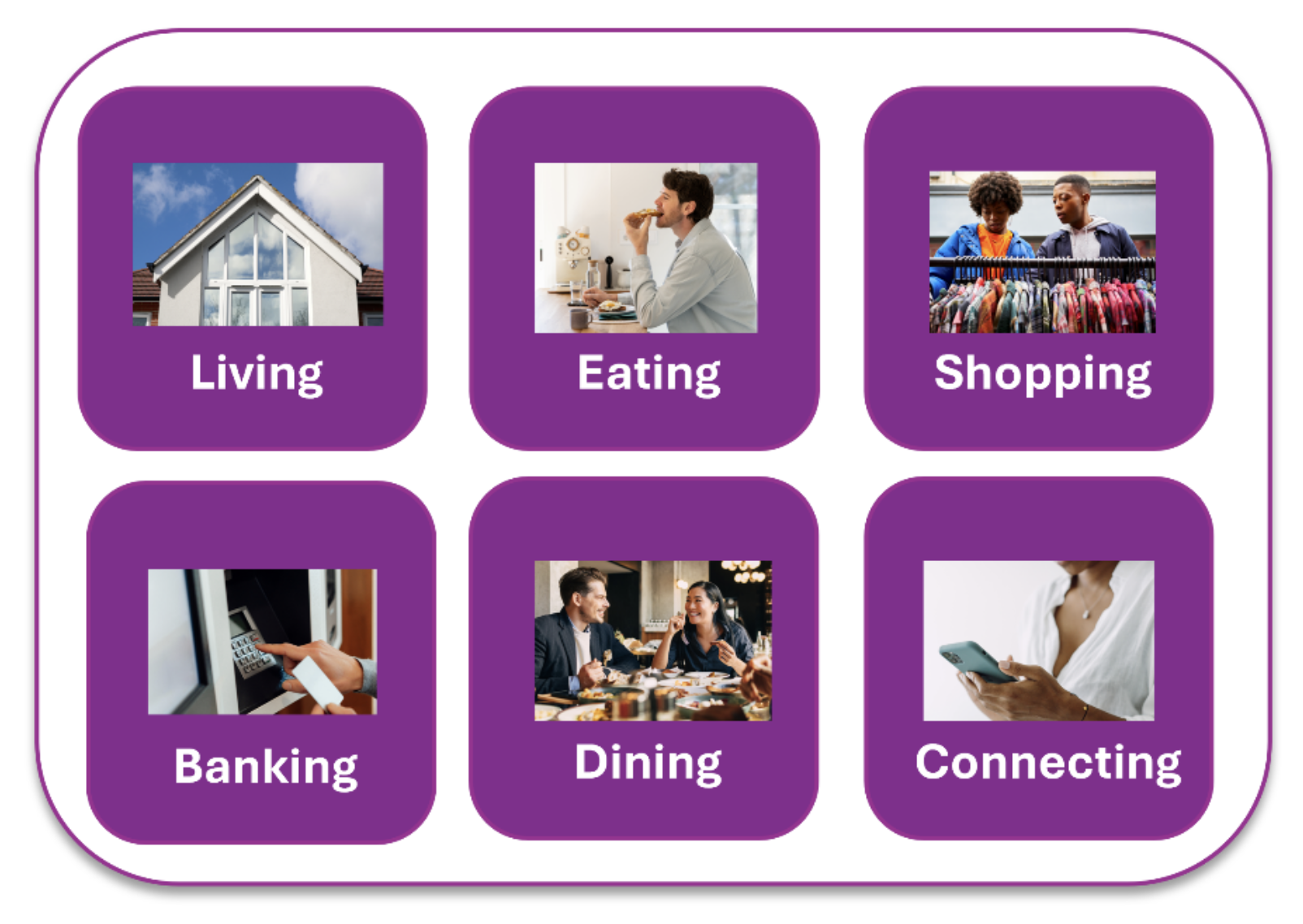
Demand Space frameworks shift the focus from static consumer traits to the moments that drive decisions. Instead of defining your audience only by traits such as age, gender, or income, this approach considers:
It’s not about who your consumer is on paper – it’s about what’s happening around them, and inside them, when they make choices.
Consumers don’t always behave the same way, even when they share similar traits on paper. A single person has different needs and behaviors throughout the day, week, or year, and traditional segmentation often misses these moments that drive real-world decisions. Demand Spaces, on the other hand, are based on the moments where context, emotion, and need converge.
When implemented thoughtfully, Demand Spaces help businesses:
Demand Spaces help businesses find the moments when consumers are underserved by existing options. These blind spots often become the clearest opportunities for growth. By identifying emotional or contextual gaps in the consumer experience, teams can design solutions that respond to real pain points and not using assumptions.
They also help businesses go beyond what consumers say they want and uncover what they actually need in specific situations. This helps teams design offerings that better reflect real-world behaviors. It’s a way to spark smarter ideas, grounded in daily routines, shifting priorities, and overlooked occasions that traditional research often misses.
Demand Space tools help position brands based on context and need, not just category. This reduces overlap and creates clearer brand roles. That means brands can carve out distinct emotional territory, ensuring each one plays a defined role in the consumer’s life, not just on a shelf.
By focusing efforts on the most critical consumer moments – when the stakes, emotions, or needs are highest – teams can prioritize smarter. It enables brands to align resources with the occasions that drive the most value, loyalty, or conversion – improving both focus and ROI.
They also help in assigning each brand, product, or service distinct moments. This ensures they serve different needs or occasions rather than competing for the same ones. By separating who serves what – and when – demand spaces bring clarity to brand architecture and reduce inefficiencies across portfolios.
Demand Spaces help businesses unlock growth by bringing clarity to what consumers need, when they need it, and why. Instead of chasing broad segments or spreading resources thin, brands can focus on the moments that truly drive behavior – revealing new opportunities, reducing internal friction, and building solutions that resonate in the real world.
Let’s say your target is a 35-year-old parent who regularly shops for snacks. Depending on the situation, they might want:
Each moment carries different emotional and functional needs – and may lead them to choose entirely different brands or products. This is the nuance Demand Spaces capture.
In a challenging market, brands can’t afford to rely on guesswork. Demand Spaces provide both smarter lenses for targeting and innovation, a more human understanding of consumer behavior, and a faster path to discovering what will actually drive choice – and growth.
To identify and activate demand spaces, brands need to move beyond static surveys. Instead, they should use context-rich research tools like:
These are some of the methods that help businesses capture real consumer behavior, in real environments. At SIVO, we combine deep qualitative expertise with flexible research models to help you map the demand spaces that matter most to your business. Whether you're reassessing brand positioning, exploring whitespace for innovation, or trying to understand behavior shifts in today’s market – we help you with the right tools and insights for your business.
Want to talk about how Demand Space research can unlock strategic clarity for your team?
We’d love to help!
SIVO Insights brings together research, talent, and intelligent technology to help organizations navigate complexity with confidence. Have a business challenge? Let's talk!
We bring together research, talent, and intelligent technology to help organizations navigate complexity with confidence