Explore the latest articles, perspectives, and analysis from the SIVO team on consumer research, market trends, and strategy.

If you're part of a consumer insights team, you already know what this time of year looks like. The upcoming start of annual planning season brings high expectations, overlapping requests, and limited capacity. You’re pulling together top trends, completing industry reviews, immersing stakeholders, and expected to deliver fast, sharp guidance that informs decisions across the business. There’s no shortage of urgency. But there is often a shortage of time, hands, and headspace.
In this post, we’ll focus on how teams like yours are preparing for the planning season pressure with smart, flexible insights support. From tips for handling the volume to examples of how fractional talent can plug in fast, this is a practical guide to getting through planning season without compromising on quality.
Planning season can be a moment of high visibility for insights teams. It’s when your work directly shapes decisions on budgets, brand priorities, innovation pipelines, and go-to-market plans. Expectations are high, and so is the payoff if done well.
This is also when the work becomes less linear, as you’re often not managing one big project, but you’re responding to competing needs from multiple teams, often simultaneously. You’re asked to shift from high-level trends to granular customer behavior, to turn data into strategy, and to do it all faster than ever. Internally, you may be running up against resource constraints, limited capacity for synthesis, or pressure to answer questions that haven’t been fully scoped. Stakeholders want insights, leaders want speed, and everyone wants you to predict the future so they can plan better for it.
This is the reality many insights leaders are preparing to navigate right now: how to maintain rigor under pressure, how to prioritize when everything is urgent, and how to protect the quality of insight that drives real decisions.
With overlapping asks and limited time, prioritization becomes a strategic skill. It’s not just about getting things done, but making sure the most valuable work gets done well. Below are a few practical ways we’ve seen insight teams stay focused and deliver effectively under pressure.
Start with internal alignment
Before saying yes to every request, align with key stakeholders on what’s truly critical to planning outcomes. What decisions need to be made in the next few weeks? What’s nice to have versus required? This helps filter the noise and focus resources where they matter most. If you’re a seasoned insights pro, this step probably comes naturally to you.
Map deliverables to decisions
For every request, clarify what decision it’s intended to inform. This helps the team determine how deep to go, what methods are appropriate, and whether existing insights already cover it.
Synthesize what’s already known
Planning often sparks redundant questions. A quick synthesis of past work, organized by theme, audience, or priority, can help prevent unnecessary rework and provide fast traction. Even a short “What We Know” session can help reset expectations and surface gaps more clearly.
Be transparent about trade-offs
Not everything can be done at the same depth, and it’s best to communicate that clearly. Stakeholders usually respond well when you explain what’s possible, what’s at risk, and where additional support would make a difference. This creates space for smarter resourcing decisions, and helps prevent extra stress and burnout among your team.
Build in a checkpoint before things scale
Use a mid-cycle checkpoint to review whether what’s being delivered is actually moving planning forward. If not, it’s better to adjust early than stretch your team to deliver work that won’t be used.
When insight teams hit capacity during planning season, the instinct is often to either say no, or simply push through. But overloading the team rarely leads to strategic work. It leads to shortcuts, slower turnarounds, and deliverables that lack the synthesis stakeholders expect – putting the strategic plans at risks.
Many teams are addressing this challenge by bringing in short-term support. But success depends on who you bring in and how they work. Traditional freelancers or overflow support often require onboarding, guidance, or extra training time. That adds to your workload instead of reducing it, and that’s not what you need when you’re already stretched thin.
What works better is adding insight professionals who understand planning cycles, know how to manage complexity, and can operate as part of your internal team. When done right, this model gives teams the room to focus on what matters most. It protects insight quality while meeting the volume and speed planning requires, and it also reduces pressure on the team, making it possible to stay sharp across multiple workstreams.
At SIVO, we work with companies across industries to extend insights teams during planning season. Our On Demand Talent includes seasoned researchers, strategic thinkers, moderators, planners, and communicators who can step into the specific functions you need. Whether that’s help managing an overflow of qual studies, needing someone to run stakeholder synthesis, or build strategic narratives that tie research to business planning – fractional insight experts are here to help.
You don’t need to compromise quality to meet a deadline, and you don’t need to burn out your team to deliver on planning season demands. Whether you need a sharp moderator for next week’s workstream, a strategic partner to help frame consumer implications, or someone to translate findings into clear planning outputs, we can match the right talent to your exact need.
Need Extra Capacity on Your Insights Team for Planning Season, Fast?
Let’s find your perfect match!
As 2026 planning season approaches, most leaders are focused on big decisions: where to invest, how to grow, and which bets to place. But the strongest strategies don’t begin with goals, they begin with your consumers.
In fact, the annual planning season is the perfect time to pressure-test assumptions. Before you finalize budgets or commit to growth strategies, it pays to refresh your understanding of today’s consumer landscape. What’s changed? What’s emerging? And what gaps in understanding could derail your decisions?
This post outlines how to approach annual planning through the lens of consumer truth, so you can build smarter, more aligned strategies. Let’s dive in!
For many organizations, planning still begins with internal goal-setting: revenue and profit targets, innovation and growth priorities, and cost cutting. And high-performing teams know that successful strategy isn’t just about setting ambition, it’s about aligning that ambition to current market conditions.
Consumer behavior is one of the most dynamic variables in that equation, and often, one of the most overlooked. Market assumptions that were true a year ago may no longer apply. Purchasing patterns, motivations, and category expectations can shift quickly, especially in volatile economic environments like the current one. And if your plan doesn’t reflect those changes, it’s much more likely to underperform.
This consumer-centric understanding is foundational. It informs product decisions, pricing, messaging, innovation, and channel strategy. Without it, even well-intentioned plans can quickly drift out of sync with real consumer needs. Starting with the consumer also accelerates alignment. It gives cross-functional teams, from marketing to finance to sales, a shared understanding of where the business is heading and why. It moves planning conversations from opinion to evidence and from speculation to strategy.
If the case still isn’t clear, consider this: even well-resourced plans fail when they aren’t aligned with current consumer behavior. It’s often not about effort or execution, it’s about starting with the right inputs. Let’s look at a few examples:
Outdated consumer insights can lead to misdirected efforts, misaligned messaging, missed opportunities, and unnecessary risk. To illustrate what this looks like in practice, here are two common scenarios where strategy easily goes off track because the consumer context was never fully validated.
A company sets aggressive growth targets and decides to compete more directly with newer players in the category. They allocate budget toward developing a new product with features they believe will differentiate them. The plan gets approved. Timelines are set. Everyone is getting ready to mobilize fast and execute.
But the innovation was based on an internal assumption about what consumers wanted – not on recent consumer insight. In reality, consumers weren’t looking for more features. They were looking for simplicity, availability and value. The company spends $$$ getting the launch ready, but the product doesn’t gain any traction. The opportunity for a product refresh was real, but the execution missed the mark because actual buyers weren’t consulted.
Another company, facing margin pressure, looks for quick wins through cost reductions. They make the decision to cut a service element they believe is underutilized, based on operational data and internal team feedback.
What they didn’t realize is that this element was one of the few remaining differentiators in the eyes of their customers. It wasn’t used loudly, but it created trust and loyalty. Cutting it might save money in the short term, but it might erode value perception and reduce retention in the long term.
A brand team, focused on stabilizing performance, decides to stick with the same marketing and channel strategy that had worked well in the past. But in the background, both consumer behavior and category norms had shifted.
Competitors began simplifying their digital experience, consolidating touchpoints, and creating seamless mobile journeys. Meanwhile, this brand was still investing in a fragmented app strategy and outdated content flows. The team didn’t realize that expectations had changed. Consumers weren’t looking for more brand interaction, they were looking for convenience and control in one place. By the time results started to dip, the gap was already visible. A competitive audit or trend review could have flagged these shifts much earlier, giving the brand time to adapt before losing relevance.
These are not unusual cases. They reflect a planning process that moved forward before validating the reality on the ground. Other common issues include planning around outdated needs or occasions, targeting segments that have shifted or declined, or simply prioritizing the things that don’t matter to consumers anyways. None of these decisions are inherently flawed, but when they’re based on outdated or assumed insight, the risk of “planning in the wrong direction” increases.
The good news is you don’t always need to start from scratch. In many cases, the best approach is to audit what you already have, identify gaps, and decide what needs to be refreshed or revalidated.
Here are some key areas worth pressure-testing, before you commit to planning:
Many teams start with a Get Smart session. It’s a fast-turn immersion that pulls together everything you already know, from existing data to partner knowledge to internal POVs, and highlights what’s still missing. These sessions help surface blind spots, align teams, and set the foundation for what to explore further through new research or analysis, which will lay the foundation for a solid and strategic plan.
Insight work at this stage doesn’t need to be complex. It just needs to be focused, current, and relevant to the decisions you’re about to make.
The strongest strategic plans are built on a clear understanding of the consumer. When that understanding is current, relevant, and grounded in reality, teams make better decisions, faster, with less risk, and greater impact. At SIVO, we help businesses enter planning season with confidence:
Whether you need to revalidate consumer segments, understand emerging behaviors, or map new usage occasions, our team designs studies that answer the right questions at the right time. We work fast, focus on what matters to your business, and turn insight into clear recommendations for strategic use you can easily relate to in your annual plans.
Need to align insights and teams quickly? Our Get Smart sessions help you make sense of what you already know and highlight the gaps that matter most. These sessions help build internal alignment early and avoid late pivots, and are perfect as a foundation for your annual plans.
Already have an internal insights team, but planning season is stretching your resources? SIVO’s On Demand Talent gives you access to senior insights professionals who can plug into your team quickly. Whether you need a trends lead, moderator, or strategic storyteller, we match you with the right expert, without hiring delays and long-term commitments. The perfect flexbile insights approach to supercharge your insights team for the planning season!
Consumer truth is the foundation of smarter annual planning. Whether you're building that foundation or scaling your team to deliver it, we're here to help.
Every year, businesses face the same challenge: key research projects grind to a halt when insights professionals go on vacation. Deadlines can slip, stakeholder requests pile up, and business decisions get delayed, all because critical expertise isn’t available when it’s needed most.
For many teams, the choice is either overloading remaining staff (leading to problems like burnout) or putting projects on hold (risking lost momentum and missed opportunities). But there’s a better way.
Leading brands solve this problem by leveraging On Demand Market Research Talent—highly skilled, fractional insights professionals who step in seamlessly, ensuring that research initiatives keep moving, even when core team members are out. Whether planned months in advance or needed at the last minute, these experts keep insights flowing year-round without the cost or commitment of full-time hiring.
In this article, we’ll explore:
If your research team has ever struggled to keep up during vacation seasons, this is for you. Let’s dive in.

Insights teams (or their superiors) often assume they can absorb the impact of vacation gaps—but the reality is more disruptive than expected. When key insights professionals are out of office, projects stall, timelines get pushed, and business decisions are delayed. The ripple effect extends beyond just a temporary pause—it can create significant financial, operational, and strategic costs.
Insights don’t operate in isolation. When research is postponed due to staffing shortages, marketing campaigns, product launches, and strategic initiatives suffer. A postponed concept test could mean missing the ideal market entry window, and a delayed brand study could leave unanswered questions right when leadership needs clarity.
The default response to vacation gaps? Overloading remaining team members. This short-term fix often leads to long-term burnout, reducing productivity and increasing the likelihood of rushed, lower-quality insights. High-performing researchers need time to recharge, but when teams are stretched too thin, performance—and retention—suffers.
Even with strong documentation, there’s always implicit knowledge that only team members carry—research nuances, stakeholder preferences, and the context behind past decisions. When an insights pro steps away, this expertise temporarily disappears, forcing teams to either pause projects or make assumptions that may not align with prior research.
Insights teams thrive on being trusted advisors to the business, but when gaps in coverage lead to stalled projects or incomplete data, stakeholder confidence erodes. If leadership views the insights function as unreliable, they may turn to gut instinct over data-driven decision-making—undermining the very role of the Consumer Insights function.
The bottom line? Vacation gaps in insights teams aren’t just an inconvenience—they create costly disruptions that affect business performance. But there’s a way to avoid these risks while still ensuring that research professionals get the breaks they need.
Vacation gaps are inevitable—but research delays don’t have to be.
Vacation gaps are inevitable—but research delays don’t have to be. The key to maintaining momentum without burnout is having a strategy in place before gaps happen. Whether you’re proactively planning or scrambling for last-minute coverage, here’s how leading companies keep research running smoothly, even when key team members are away.
When key team members are out, the biggest risk is insights bottlenecks—studies stall, stakeholder questions pile up, and research deliverables get delayed. SIVO’s On-Demand Talent steps in seamlessly, ensuring business-critical work continues without disruption.
Certain projects can’t afford to pause just because someone is on vacation. Product launches, consumer deep dives, and ad testing require continuity and expert oversight.
Sometimes, vacation coverage isn’t planned—it’s needed last-minute. Whether it’s a sudden leave of absence or a forgotten PTO overlap, scrambling to fill gaps can lead to expensive delays.
Whether planned or unexpected, vacation gaps don’t have to slow down insights. With an On-Demand Talent strategy in place, businesses stay ahead of potential disruptions—avoiding last-minute scrambles and keeping research moving seamlessly year-round.
Leading companies plan ahead—or react quickly—with On-Demand Talent, ensuring no critical work falls through the cracks that can impact the organization. Here’s how organizations leverage fractional insights pros to bridge gaps and keep research running smoothly:
Scenario 1: A national CPG company has ongoing brand equity tracking and ad testing, but their Senior Consumer Insights Manager was heading out for a month-long vacation.
Without coverage, research timelines would have slipped, and stakeholder meetings would have lacked fresh insights. Instead, the company brought in an On-Demand Consumer Insights Strategist to manage the process, ensuring:
This proactive approach prevented research bottlenecks and decision-making gaps, keeping the business moving.
Scenario 2: A global food & beverage company had a new product launch scheduled—but their Head of Consumer Insights and two key team members had overlapping PTO.
With final-stage concept testing still underway and last-minute adjustments needed for packaging and claims, the company faced a potential launch delay. Instead of postponing, they brought in a fractional Insights Lead to:
ODT gave them specialized expertise exactly when they needed it, ensuring no compromises in research quality or speed.
Scenario 3: A leading technology brand was in the middle of a competitive landscape study when an unexpected leave of absence left their insights team short-staffed.
Rather than overloading remaining team members or pressing pause on critical work, they:
With rapid-response talent placement, the company avoided research disruptions and kept its competitive intelligence up to date.
Scenario 4: A major retailer had a busy summer innovation pipeline, but multiple insights pros were out on PTO at the same time.
Rather than pausing consumer co-creation sessions and delaying concept testing, they used On-Demand Talent to:
With fractional insights experts seamlessly filling gaps, the company stayed on schedule without sacrificing research quality.
Whether you plan ahead or need urgent support, On-Demand Talent ensures your research stays on track—so your team can take time off without work grinding to a halt.
By leveraging fractional insights professionals, companies can prevent last-minute scrambles, reduce the risk of missed deadlines, and maintain research momentum year-round.
So, how do you avoid research slowdowns when your team is out? And if you’re already facing an urgent coverage issue, what’s the best way to bridge the gap without scrambling?Let’s break it down.
Businesses plan for financial forecasts, marketing campaigns, and supply chain logistics months in advance. Yet, many insights teams still treat PTO gaps as an inevitable issue. The key is building vacation coverage into your annual research strategy so that insights continue flowing, no matter the time of year. Some things you can do:
Planning ahead prevents vacation gaps from becoming business roadblocks. But what if PTO conflicts weren’t anticipated—and now key insights work is at risk of falling behind?
Even with careful planning, unexpected gaps happen. A last-minute PTO request, overlapping team absences, or an urgent business need can leave insights teams short-staffed at critical moments. If you’re already dealing with a research gap, here’s how to minimize disruption fast:
As companies seek more efficiency, many turn to AI-powered research tools to bridge staffing gaps. While AI can be a valuable support system, it has clear limitations that make it an unreliable substitute for expert insights professionals—especially when high-stakes decisions are involved.
For instance, AI is great at surfacing data but doesn’t interpret nuances, human motivations, or cultural relevance—leading to misaligned insights. AI models also (unfortunately) inherit biases from training data, which can skew results if not carefully reviewed and adjusted by human experts. Additionally, executives rely on strategic recommendations, not just raw data—AI lacks the credibility and business acumen needed to drive stakeholder decisions.
If you’re considering using AI to fill vacation coverage gaps for your research team, keep in mind that the more tools you introduce, the more training your team will require. This can actually take more time away from employees rather than increasing productivity—especially for short-term needs like a vacation fill. What seems like an easy solution can quickly turn into a time-consuming distraction, creating more inefficiencies rather than solving the original problem.
When critical insights projects can’t wait, finding temporary research experts quickly is essential. So, where can businesses turn for immediate, high-quality research support?
Many organizations look to freelance platforms and consulting firms, but these often require lengthy onboarding or lack the industry expertise needed for specialized research roles. Others attempt to redistribute workloads internally, which can lead to inefficiencies and overburdened teams.
A more effective approach is tapping into pre-vetted insights professionals (like ODT) who can integrate quickly, understand complex research needs, and keep projects moving without disruption. Whether covering for a planned PTO or responding to an unexpected gap, having a flexible resourcing strategy ensures that insights teams can maintain momentum—without last-minute scrambles or overburdening internal staff.
At SIVO, we provide businesses with flexible, on-demand insights talent to keep research initiatives moving—no matter the challenge. Whether you need short-term vacation coverage, interim leadership, or specialized expertise for a critical project, we place senior-level insights professionals within days.
Don’t let research slow down when key insight team members are out for vacation. Let’s talk:
contact@sivoinsights.com | www.sivoinsights.com/on-demand-talent-management/
As your company is developing and promoting their products and services, it is critical to understand your consumers’ attitudes and behavior to grow the business.
Understanding your consumers require specialized professionals who have the proven market researchtools and best practices. They use a combination of art and scientific methods to gather data regarding consumers’ attitudes, needs, desires and behaviors. So, how do they gather this relevant and meaningful information about the individuals they are seeking to reach and understand more deeply? The answer is Market Research.

Connecting with your consumers and understanding their opinions, needs byutilizing a market research-driven approach can make all the difference in identifying opportunities to build a successful business.
According to Forbes, “Data-driven decision-making (DDDM) is just a fancy term for making intelligent decisions based on what your data is telling you. Modern market research combines DDDM with advanced technology to uncover even more granular data, which can be used to personalize market messaging and find potential areas for growth. Traditionally, market research encompasses four major disciplines: primary, secondary, quantitative and qualitative.”
Primary research gathers first-hand data from consumers. It gives brand teams direct feedback on their services or products from those who are familiar with it or use it. The results are considered conclusive when the data is collected from a representative sample of consumers. Secondary research is when your sources of feedback come from other researchers or second-hand information. This type of market research provides consumer insights by studying trade journal articles, social media conversations, government agency data and published market studies and applying the information to inform business decisions and guide strategies. Together, primary and secondary research can provide more comprehensive and meaningful consumer insights.
Primary research is comprised of both qualitative and quantitative research methods. Qualitative research, which is often exploratory in nature. It captures the in-depth nuances of what consumers say, do, and think by collecting non-numerical data. This could be done through ethnographies, in-depth interviews, focus groups, shopper intercepts, and mobile missions to gather insights that help solve a problem or help you understand your consumers better. Qualitative methodologies focus on obtaining smaller sample sizes so more time can be spent with each consumer. It focuses on the “why” behind consumer opinions, beliefs and behaviors.
Quantitative research is centered on identifying, benchmarking, prioritizing, validating, and translating data into insights that reveal opportunities. Typically, data is collected via online surveys. Quantitative methodologies focus on obtaining larger sample sizes that allow for a higher degree of statistical reliability. This type of research deals with applying statistical analytics to numerical datasets for many business objectives, such as building consumer segmentations, assessing product appeal, understanding the attitude toward and usage of products and services, and mapping consumers’ path-to-purchase journeys.
Both of these research approaches can provide excellent results. It is important to choose the approach that best addresses the business objectives, while taking timing, cost and level of business risk into account.
While primary research provides useful feedback on consumer attitudes and behaviors that can be utilized for developing marketing strategies, there are additional research methods that businesses can leverage to offer teams a holistic view of the consumer.
Brand Sentiment Analysis
Knowing how your brand is perceived by consumers and potential consumers can help you understand the impact of your marketing efforts. . A few factors to look at are consumer awareness, loyalty, advocacy, and value, . Social media monitoring tools are great assets when it comes to measuring consumer sentiment. Studying social media conversations and metrics allow team to identify insights and translate them into actionable strategies. This is a great way to gather unfiltered consumer feedback on your brand.
Understanding your brand sentiment also means knowing how your brand is perceived versus key competitors. It requires selecting the right web conversations to track consumer sentiment for your brand and the competitive brands, to understand strengths, weaknesses, potential threats and opportunities to better compete.
Competitive Intelligence
According to the U.S. Small Business Administration,
“Competitive analysis helps you learn from businesses competing for your potential customers. This is key to defining a competitive edge that creates sustainable revenue. Your competitive analysis should identify your competition by product line or service and market segment.”
Competitive intelligence can support your brand in creating or optimizing marketing campaigns and strategies such as advertising, pricing, and product development and placement. Consider gathering competitive intelligence to get clear on your level of competition and proactively develop relevant actions to compete effectively.
Customer Segmentation
Consumer segmentation is an excellent way to classify customers into specific groups based on their shared characteristics. From here, you can refine your messaging, sales tactics, voice, and tone to connect with these segments of people who are most likely to respond positively to your strategies. This effective approach involves categorizing consumers into different segments, based on their demographics, geographics, behaviors, and psychographics.
The benefit of this market research analytic technique is that consumer segmentation helps businesses devise comprehensive strategies that can help brands attract new customers, retain existing ones, and create brand loyalty across the consumer base.
How Your Business Can Stay Competitive
With technology rapidly increasing and new products and services entering the market daily, it can feel like an uphill battle to stay ahead of the competition. This is why utilizing SIVO’s consumer insight and market intelligence solutions are some of the best decisions you can make for your business. At SIVO, we help you better understand your customers, differentiate from the competition, and develop consistent, consumer-centric products and services by providing your team with actionable insights.
We do this by analyzing market research data that reveals consumer attitudes and behaviors.. This information is turned into actionable insights that result in satisfied consumers, thus higher salesand incremental growth. SIVO will:
SIVO has worked with start-ups to Fortune 500 companies to understand their most essential needs. We then design and execute best-in-class custom market research aligned with your business objectives.
Trust SIVO to Help You Better Understand Your Consumer’s Behavior
SIVO will help you drive your business forward with consumer insights, organizational intelligence, market and competitive intelligence, or on demand talent solutions.
Contact SIVO today to schedule your discovery call.
In your brand's early development stages, you likely gave much thought to the idea of a buyer persona.
You researched who you expected to purchase your products, how they would interact with your brand, and which factors would influence them to choose your brand over a competitor's. You painted a picture of what their needs are, what they do, and how their key motivators would align with your offerings.
Now, it's time to see that journey in action.
The path to purchase describes the journey that your target buyers take from the moment they first discover your product or service until they ultimately decide to buy it. The better you understand this journey, the easier it is to connect with them at key milestones and decision points to convert them from awareness to consideration to purchase, and then to repeat purchases.
Today, we're sharing how to conduct this research effectively and what to do with the results you uncover.

Put simply, the path to purchase encompasses all of the steps that your users take as they convert from a prospect into a paying customer. This can include multiple different channels, touchpoints, and platforms.
While each person's brand experience will be nuanced and unique, most leads take a few central steps as they travel along this journey. These include:
Also known as a customer journey or buyer journey, the path to purchase can be a valuable part of your audience analysis. It allows you to climb inside the mind of your prospective buyers, and current buyers and understand why and how they're engaging with your brand.
Let's break these stages down a little, explaining the important aspects to research and analyze.
The first step in the path to purchase is awareness. This is the moment that your prospective customers first learn about your brand, and it sets the tone and the stage for the rest of your interactions together.
Years ago, mass marketing campaigns were more effective than they were today. Modern buyers want customization and personalization at every turn, and 80% are more likely to purchase from a brand that offers tailored experiences. This means that gone are the days when you could send out one e-mail blast or a generic postcard to your leads and expect them to convert.
Now, the most effective ways to reach your target audience include:
Not only should these outreach measures be personalized, but they should also include a call-to-action (CTA) that encourages users to take that next step. Do you want them to check out your website, sign up for your e-newsletter, contact you to set up a consultation? Remember to make the CTA clear, actionable, and easy to follow.
Once you've initiated the path to purchase, you can track your marketing efforts, e.g., engagement and response rate, to understand how effective your chosen tactics were. For instance, with inbound marketing campaigns, most website analytics platforms, such as Google Analytics, or CRM systems, such as, HubSpot, allow you to easily monitor the traffic going to your website, the number of views each blog gets, or the success rate of your paid online ads.
Regularly review these numbers to understand which channels are the most successful. Then, fine-tune the most profitable ones and look for ways to eliminate or phase out the ones that aren't as fruitful.
For larger brands with national distribution, you can also conduct advertising and brand awareness tracking research to understand the percentage of consumers who are aware of your advertising and brand, pre vs. post the execution of your marketing campaign or in regular intervals such as, one or two times per year.
Key questions to ask at this stage include:
Piquing the interest of your target buyer is only the first part of the path to purchase. Next, the prospect will consider all of the features that your company or product offers, comparing them against others in your same space. They're looking for differentiators that set your brand apart, such as price point, quality, speed of delivery, product features, and more.
To perform this competitive analysis, they may perform the following steps:
At the core of this step is the buyer's need for information and insights. If you can provide this intelligence about your solution better than anyone else can, then you're more likely to move them from this phase of the buyer journey to the next.
In this step, you'll need to research and manage your online presence and reputation. Do you know what your target buyers will see when they search for your brand name online?
There are reputation management tools that can help you uncover and respond to your company reviews. In addition to the reviews on your website or Google Business Profile, remember to also check common and industry-specific third-party review sites.
Another area to research is how well you've explained and demonstrated your product or service. If a prospective customer wanted to learn more about how your solution works, are there online descriptions, manuals, sheets, videos, or in-store signage that make this step simple? The more transparent you can be, the easier it is to compare your solution against another.
Key questions to ask at this stage include:
After a lead discovers and researches your brand, they may decide to take that next step and make a purchase. To help them get there, you'll need to provide information that reveals why your company or offering is the best fit for their needs.
Depending on the solution you offer, this could require the buyer to make a significant investment. They'll want to review all of their options and compare top features to make sure they're making a wise decision.
This final stage of the path to purchase is all about sealing the deal. Research your company's current methods for engaging prospects and moving them along the sales funnel.
Some companies with “Business to Business” (B2B) offerings might use this time to perform presentations, pitches, and demos to share how their products work. Others with “Business to Consumer” (B2C) offerings might use advertising, on-package claims, third-party endorsements and in-store signage to demonstrate their benefits to prospective buyers. . The nature of your business and the type of audience you serve will dictate the exact strategy you deploy.
Key questions to ask at this stage include:
At each stage of the consumer path to purchase, you'll have the opportunity to gather insights into buyer behaviors. As you do, it's important to know what metrics to track, when to dive in, and who to involve. Here are a few tips to help you make the most of the data you obtain.
As brands seek to improve their buyers’ path to purchase experience, most are focused primarily on hard numbers, aka quantitative data, about the purchase, including volume, amount and frequency of sales, who and where purchased, percent of repeat purchases, etc. While this type of behavioral data is extremely important -, but don't underestimate the value of qualitative insights about the buying journey.
The ultimate goal of each phase is to understand the mindset of your buyers, and you can't get there with quantitative measurements alone. You need to understand the emotions that your prospective buyers are feeling, as well as what's behind their concerns, hesitancies, and excitement.
A few of the ways you can capture qualitative feedback include:
Not only are these insights helpful in directing your current and future campaigns, but they can also motivate your internal stakeholders. If you can share direct quotes and client feedback with your C-suite and marketing teams, it's easier for them to understand the human side of their work, in addition to the technical and economical side.
For some B2C companies, there is a primary shopper involved in each brand interaction. However, most B2B transactions involve other, behind-the-scenes decision-makers and influencers.
As such, resist the temptation to consider the path to purchase as strictly linear and one-dimensional in nature. In reality, it's more multi-faceted and complex.
Try to learn about the key stakeholders involved in buying decisions, as well as their specific roles. It also helps to understand how they interact with one another, as well as when each one enters and leaves the buyer journey. While some will be involved from start to finish, others may join and leave at different times.
To get the fullest view of your path to purchase, don't start your research at the first time the buyer and seller interact. Instead, go back even further to the pre-shopping stage. Increasingly, this means analyzing how buyers live, work, and how they find and compare offerings to meet their needs.
Today, most buyers are hopping online to discover new brands. In fact, in the B2B sphere, the average customer performs 12 different searches before deciding to engage with a specific brand. While it can be difficult to pinpoint exactly when a buyer first discovers your brand, spend time exploring different purchasing triggers to understand how to optimize these interactions.
As you research and learn more about your customerpath to purchase, you can customize and fine-tune your offerings and marketing communications to appeal precisely to those who are interested in them the most.
At SIVO, we're dedicated to helping our clients understand their buyers' needs, beliefs, and behaviors. We can help you gain visibility and address challenges by asking the right questions directly to your target audiences. Then, we'll work with you to turn those insights into actionable steps that can drive conversions, improve engagement, and build brand reputation. Contact us at Contact@SIVOInsights.com or go to SIVOInsights.com today to schedule a discovery call and connect!

The great resignation took a major toll on businesses across industries in the last few years. Businesses that prided themselves in workplace culture, flexibility, and benefits saw long-time employees step down from their roles. At the same time, more and more companies face transformative restructuring, like acquisitions and mergers. Following such major changes in the world at large and within organizations, the opinions and beliefs held by workers changed tremendously, and even the most forward-thinking businesses have suffered the consequences.
With that, many businesses are looking for a path toward improving performance and commitment in the workplace. How can they avoid employee attrition in the future? How can they improve their processes to boost efficiency and support employees? How can they redirect leadership to provide the support those employees need? At the end of the day, organizational intelligence gets data-driven insights to answer all these questions, and much more.
First thing’s first, what is organizational behavior? Organizational behavior is how individuals interact and behave in groups. It’s especially relevant when looking at the workplace. Forward-thinking businesses take their organizational behavior seriously, because it greatly impacts employee satisfaction and engagement, leadership performance, and overall workplace efficiency and effectiveness. If organizations do not understand their employee behavior, perceptions and opinions, they miss out on insights that could holistically improve their business. The best way to get those opinions, and translate them into a strategic action plan is to leverage organizational intelligence solutions.
Who should gather organizational behavior data? Your team is full of subject matter experts on your business and your industry, but when it comes to gathering information on organizational behavior, they may not be the right facilitators. Internal teams will have natural bias and may have subconscious results in mind, and could therefore not ask appropriate, unbiased questions. Plus, when it comes to listening to your employees, you want to get thoughts from a wide range of team members. That means allocating the task to an outside expert, to increase cooperation by maintaining employee confidentiality. Ultimately, this gives every employee the opportunity to provide their opinions, maintaining employee anonymity while removing all potential bias from the initiative.

So, what are the keys to improving performance and commitment in the workplace? Understanding what motivates your team members is key to educating and empowering leadership to create a path toward a better future for your company. Get a breakdown on employee insights, leadership development, and strategic planning facilitation below:
What are the honest opinions of your employees when it comes to your business culture and processes? When leadership asks them directly, they will likely get a much different answer than an unbiased facilitator. However, there are many ways to gather this information from your team. An organizational intelligence expert can identify a custom learning plan based on your business, and implement solutions designed to get the most valuable feedback from employees. According to the Harvard Business Review,
“High-OQ (organizational intelligence) leaders foster an understanding, or ethos, of “who we are.” When leaders move from managing individuals or small groups to leading entire organizations, they need to create a shared understanding of what’s important and what the organization stands for — in other words, an ethos.”
What kind of exercises result in the best employee insights? This varies depending on the organization, but typically it comes down to both qualitative and quantitative research. Some examples of qualitative research include one-on-one interviews, small group employee discussions, and stakeholder interviews. Meanwhile quantitative research looks more like customized online employee engagement surveys targeted to specific employee teams, departments, functions, and regions. Often, employee engagement surveys are administered with regular frequency, e.g., annually or bi-annually, to measure positive or negative changes in employee satisfaction and engagement over time.
Your industry is constantly changing, your business is growing, and workplace expectations are ever-evolving. Is your leadership adapting to accommodate? Modern businesses must create an expectation for agility in leadership to keep employees engaged and motivated. That means regular leadership training, coaching, and development. Organizational intelligence experts can handle the task and provide tailored, relevant coaching that meets the needs of your leaders. It begins with one-on-one introductory sessions, a 360 degree leadership assessment and follow-up analysis, development planning and coaching sessions with leaders at all levels of the organization - executives, high-potential leaders, and new managers. This results in more effective leadership and impactful business management that can exceed the expectations of their teams.
What solutions are involved in leadership development? First, there is leader coaching and education, which can include leadership assessments, feedback, and career planning directly with leaders. This can take place individually or in group/cohort sessions. There is also team effectiveness training, which helps teams define their purpose, processes, roles and responsibilities, as well as individual contributions. This is especially important for businesses facing restructuring, where new teams are being formed and leadership responsibilities are changing.

You have so many initiatives in the works – strategic planning can feel like one of those tasks that could easily get pushed down the line. However, strategic planning is the high-level exercise that impacts every other element of your organization. Outsourcing guarantees timely and effective execution, especially when you pick the right partner for the job. Market research firms like SIVO offer comprehensive workshops to ensure your team develops a sound strategic plan that will successfully lead the company into the future.
These facilitated workshops are especially beneficial to newer businesses or businesses facing large changes, like acquisitions, mergers or a challenging external environment. Knowing how to bring teams together, leveraging critical and inspirational inputs is no small task. That’s why it’s beneficial to have experienced strategic planning facilitators on your side, to plan and facilitate the workshop so that you leave the session with a clearly defined vision, mission, values, plans and ownership assignments. Sessions may also focus on other topics, such as communications planning, insight activation sessions, special-interest group planning, and even competitive SWOT analysis. Regardless of the focus, each strategic planning session will help leaders develop and align on clear strategies for the future, to drive business success.
No matter the business, every employee wants to be heard. Creating a place for employees to provide their thoughts can only benefit your business. From an employee perspective, these people-focused exercises prove that leadership cares about their opinions and wants to make steps to improve their workplace experience. The same goes for dedicated strategic planning exercises and leadership development. These initiatives create a stronger, people-first organization positioned to succeed. When leaders are effective, employees are motivated, and business strategy is in place, it all adds up to improved performance and commitment in the workplace – and more success in the market.
Organizational intelligence services result in game-changing insights that can transform your business for the better – and position you for even more growth down the line. Your team members have the deep knowledge about the company and industry, and often, their perspectives can unlock opportunities that leadership would have never otherwise considered. Once those insights are relayed to leaders with actionable recommendations, you can accomplish so much more within your organization.
Are you ready to gain insights on your organizational behavior? Get information on every aspect of your organizational behavior with SIVO. Our team of organizational intelligence experts can help you lead your team through any major transition. We work with organizations across industries, and build custom insight solutions that holistically improve performance and commitment in the workplace.
Contact SIVO today to discuss your business needs and get support.

Wondering how to facilitate a strategic planning session? Strategic planning facilitation allows you to gain valuable insights from your organization, create a plan, and build strategies to achieve your goals. These exercises are a vital part of any organization's success, and with SIVO Organizational Intelligence, it has never been easier to create a strong foundation for your business. Explore the benefits of holding a strategic planning session within your team below.
First thing’s first, what is strategic planning? Strategic planning is a process used by organizations to set their short or long-term goals, determine their strengths and weaknesses, and create a blueprint to achieve those goals. It is an opportunity for leadership teams to align their vision, mission, and values and build the company's future plans and strategies. Strategic planning facilitation is the engine to the car that drives plans and strategies.
A strategic plan helps determine an organization's future, ensuring that all employees are working towards the same goals. It helps to prioritize resources and allocate them to areas that will bring the most value to the company. Additionally, it helps organizations identify areas for improvement, stay ahead of the competition, and make data-driven decisions.
So, we know what strategic planning is and we know why it matters -- but what is the best way to implement it? A best practice to gather and leverage insights is to have a third-party facilitator manage and facilitate your your strategic planning. This allows teams to participate in the planning discussion, rather than preparing for and guiding the discussion. Facilitators can also document the discussion as it happens, to focus teams on the topic and guide the discussion toward valuable outcomes.

Diving into this process is no small task. Luckily, with the help of a facilitator it becomes much more manageable because you have someone to handle the preparation, session facilitation, documentation and recap of the plan and outcomes. With an expert facilitator as your guide, you will leave your session with a Strategic Plan that will:
This is your opportunity to bring key leaders in the organization together to discuss the company's future. It helps to align everyone's goals and objectives, so everyone is working towards the same vision. Often, individual team members bring a unique perspective to the planning session. That’s why it’s important to discuss their expectations, the current and potential challenges and opportunities that each leader faces, as well as external market forces that may impact the strategic plan. Discussing these inputs during the session allows the team to address key issues and avoid pitfalls as the plan is being developed.
Strategic planning helps organizations identify areas for improvement and opportunities that will bring the most value to the company. These process-driven decisions can fall to the wayside without a dedicated space to identify internal and external opportunities and build plans to achieve them. . The planning process leads to increased effectiveness, efficiency and a better return on investment.
Strategic planning allows organizations to prioritize their resources, ensuring they are used in the most effective way possible, to achieve the company goals. Expert-led planning exercises can uncover redundancies and slowdowns within current processes. The strategic plan can help to increase efficiency by reprioritizing resources to align with key opportunities.
By having a clear roadmap for the future, leaders can make data-driven decisions that are in line with their goals and objectives. The strategic plan provides focus and clarity and it helps to reduce the risk of making poor decisions that could harm the organization in the long run.
Remaining competitive in your industry requires consistent reevaluation and reimagination. From identifying issues in current workflows, to hearing ideas from team members, to researching emerging trends in your industry and related industries -- there are so many opportunities to enhance your organization and get ahead. This information is used as inputs into the planning session, to help you build a strategic plan that addresses key issues and capitalizes on the best opportunities to grow the business and gain market share.
When employees understand the company's plans and strategies, they are more likely to be engaged and motivated to contribute to the organization's success. Chances are, they also have valuable thoughts on areas for opportunity and improvement. That’s why it can be very valuable to include employee insights in the strategic planning process. It can unlock game-changing opportunities that company leaders may have overlooked. Plus, gathering employee feedback can improve company culture and create a positive work environment by improving employee morale.
Strategic planning provides a roadmap for the future, ensuring that everyone in the organization is working towards the same goals. This helps to ensure that the organization remains on track and empowered to achieve its long-term objectives. SIVO’s Organizational Intelligence provides the tools to create a rock-solid plan for your business, so you can execute, and get ahead.

SIVO Organizational Intelligence is a trusted partner for organizations looking to leverage strategic planning. In our strategic planning sessions, SIVO's expert facilitators listen and probe to understand your organization’s needs and goals. Then, we help you develop a comprehensive plan with strategies to grow your business and win in the marketplace.
By working with SIVO, your team can leverage experts with 20 years of experience, across industries and company sizes, in organizational development and strategic planning facilitation. Our strategy and market research firm creates custom solutions that meet the unique needs of our clients.
Could your business benefit from our insights and expertise? Get in touch with our Organizational Intelligence team to schedule a discovery call. SIVO will develop a custom Organizational Intelligence solution that aligns with your needs so you can get ahead.
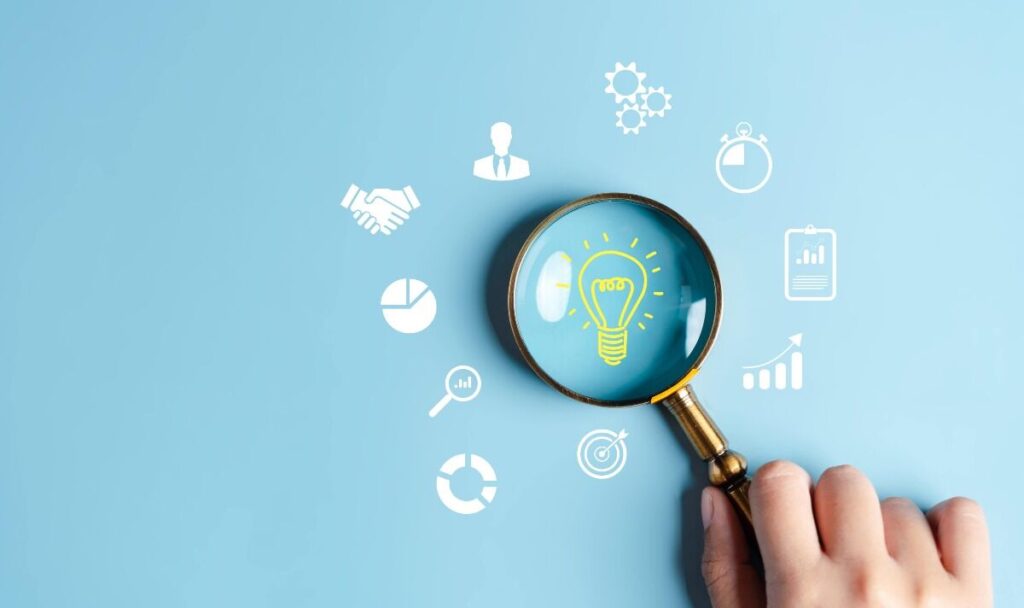
Across industries, brands attempt to access and leverage data to unlock stronger sales and business growth. Your team can bring a wealth of experience and expertise to initiatives, but getting feedback from the people who engage with the product produces better outcomes. Below, we’ll answer the questions: what are consumer insights? Why are consumer insights important? And What is the best way to get consumer insights for my business?
First thing’s first, what are consumer insights? Consumer insights are the underlying motivations or needs that make a consumer behave a certain way. Insights professionals work to understand consumer attitudes, requirements, desires and behaviors to uncover insights that can then guide brand building, portfolio and marketing communications efforts. Many organizations gather data from their consumers, but the real depth of insight comes in asking the right questions and getting the full picture from consumers. Insights gleaned from studying and connecting with your consumers can inform nearly every aspect of your business’ path to growth.
So, how do you get consumer insights? Businesses can get consumer insights in several ways. The correct method for your team depends largely the business question, as well as the industry and market you serve. For example, organizations may capture qualitative data via focus groups, in-depth interviews, and user immersions to identify the nuances in consumer values and opinions.
Meanwhile, quantitative data like path-to-purchase, product testing, and volumetric forecasting can help teams validate consumer interest and behaviors and build confidence in decision-making and actions. Consumer insights experts can gather this information in a number of ways. See some of the most effective consumer insight solutions and techniques below:
Qualitative Consumer InsightsQuantitative Consumer InsightsEthnographies
In-Depth Interviews
Focus Groups
Shopalongs
Shopper Intercepts
Mobile Missions
Online Bulletin Boards
Fishbowls
Agile Sprints
Rapid Refinement
Communication Checks
User Immersions
In-Home Usage
Interactive User Experience
Jobs to Be DoneSegmentation
Attitude and Usage
Path-to-Purchase
Tracking Testing / Screening
Brand Positioning
Brand Architecture
Product Testing
Creative Testing
Opinion Polling
Now that we know what they are, why are consumer insights important? Essentially, consumer insights remove some of the speculation from your business decisions and actions. It provides actionable answers to what consumers think about your brand, your category, and your products or services. Once you receive those insights, you can take it and run. It’s the fuel that ignites new product or service innovation and optimization, brand experiences and communications. At a higher level, it gives your business access to an entirely new perspective within your consumer market. Consumer insights give you a more holistic understanding of the consumer target audience you want to connect with, allowing you to gain a competitive edge within your industry.
So, why is consumer insight important? There are several reasons growing brands invest in these solutions to drive growth and gain a competitive edge. See why more and more businesses focus on obtaining consumer insights for their strategies below:
The best business strategies have data-backed insights behind them. Consumer insights allow you to identify a “why” to inform and support your business initiatives. The same goes for your brand.
Understanding what people truly believe about your brand can transform marketing strategies. Today, it is important to know who your customers are, what they do, what they value, and why it matters. The best way to answer those questions is to identify your consumers and start a dialogue to better understand them. This dialogue and the insights that come from it allows your business to bring more value to the people you serve. It all leads to better customer experiences and a stronger return on investment.

Every product or service has areas for improvement. Who are the best people to provide that feedback? The individuals who purchase and use them. Getting honest opinions on your current portfolio helps you identify the best places for optimization. You can spot holes in the market and create solutions that fill consumers' unmet needs. Some of the best product ideas and business innovation can come straight from your customers.
It all starts with empathy. Providing enhanced, consumer-focused products and services can only benefit brand loyalty. Brands need to continuously check in with their customers to ensure they have positive brand experiences and identify new ways to delight them. As mentioned above, your products/services can consistently improve to meet the needs of your customer base. Ultimately, this all works toward a stronger relationship with your audience to gain ongoing loyalty. That goes a long way when they are choosing between brands.
How can consumer insights fuel your marketing campaign? Speaking directly to your target audience members creates more nuance and specificity in your consumer-first marketing campaigns. Every engagement in your advertising and beyond should prioritize your consumer. Understanding their values and preferences deeply allows you to speak to them more directly and effectively. If you’re on the journey of building your brand or audience-based marketing (AMB) strategy, these insights provide a path toward successful campaigns that move the needle and influence consumer behavior.

What is your customer’s experience with your brand? Are there features that they like or dislike? Sometimes small things go unseen by marketers, but small details can leave a lasting impression on consumers. Whether it’s digital user journeys, messaging, or customer service conversations, it’s invaluable to hear, understand and react to what people think when they engage with your brand, products, and representatives.
If your organization is wondering how to get consumer insights, the best path is through a specialized consumer insights company. SIVO is a global insights and strategy firm specializing in understanding people and their needs and beliefs that drive behavior. We partner with brands to answer key questions that guide strategies and fuel growth. First, we schedule a discovery meeting, where we ask your stakeholders and subject matter experts key questions about your business and needs. Then, we design a custom research approach that aligns with those requirements. From the data gathered, we identify key insights that inform your decisions and drive business growth. Our experts act as your ongoing partner, helping you access your consumers and interpret the research every step of the way.
Ready to get meaningful consumer insights to unlock your next business and brand strategy? SIVO provides full-service custom consumer research and experiences for business across industries. Whether you need consumer insights, organizational intelligence, market and competitive intelligence, or on-demand talent, we empower organizations to get the most of their business, marketing, and brand building efforts to better achieve their goals. Contact SIVO today to get started.
By Kerry Juhl
Fast changing marketplace dynamics and consumer behavior tied to the recessionary economy are putting businesses at a crossroads. Teams need to quickly assess their priorities and pivot to new revenue and profit growth strategies. But in times of upheaval, the activities of teams can take over and they run the risk of confusing activity for progress. The alignment gained by pausing and reflecting as a team can keep the momentum going on key priorities while letting go of the rest.
An important step amidst a consumer learning initiative is to reflect, assess, and decide on next steps. It can happen in-person or virtually and can take as little as 60-90 minutes of the team’s valuable time. For this critical step in the journey, an outside, unbiased facilitator can be your most powerful tool.

There is no better time than now to consider these top 5 benefits of engaging a professional facilitator:
1. Unbiased Professional
A trained facilitator brings the valuable benefit of being an objective leader who can listen to all points of view, not vested in a particular position or outcome. This creates the conditions for a more open dialogue and opportunity to see possibilities that otherwise may be missed.
2. Participate in the Discussion
Ask yourself where you can add the most value. Should you try to participate and facilitate or focus 100% on participating with your team? Engaging a trained facilitator does a couple of things. It sends a message that this work is important. It also allows you, the owner, to invest your energy into the discussion while allowing an expert facilitator to customize the process and tools around your needs and objectives.
3. Full Engagement
Critical to success is hearing from everyone in the group. This can be tricky, particularly if there are strong (or silent) opinions and voices, and now you are not in the same room! Facilitators are skilled at navigating the group dynamics and engaging all participants into the discussion to ensure each voice is heard. They also know how to keep the ideas flowing when the group might get stuck.
4. Stretch Thinking
One of the most valuable benefits of a trained facilitator is the ability to stretch the group’s thinking. They are experts at quickly capturing ideas, summarizing, asking the right questions to build on ideas, connecting the dots between ideas, and pushing participants to think outside the box.
5. Drive to Solutions
With a process designed to meet the objective, the facilitator continually uses techniques to ensure a successful outcome with clear next steps, accountability and buy-in from the group.
Through the stages of Immersion, Interaction and Ideation, we help our clients gain empathy and develop the strategies and alignment needed to boost momentum and forward progress toward the team’s goal. Please contact Kerry.Juhl@SIVOInsights.com to learn how we can customize an approach with the right professional facilitator to meet your needs. We have a team of seasoned professionals who are passionate about working with like-minded clients and would love to talk to you!
by Brent Budke
In today’s economy and remote working environment, there is much discussion about the need for a fractional workforce. The U.S. Chamber of Commerce notes that fractional hiring began in the academic world but then expanded to small start-up businesses that were looking to fill skill gaps. Now it has become just as important in larger companies that can’t afford the loss in business momentum that often coincides with open positions.
What is a fractional employee?
Fractional employees (or what we refer to as SIVO On Demand Talent) are typically Professionals or Specialists with unique or advanced skillsets, that only work for a set number of hours per week and/or for a finite timeframe. This can be beneficial for the employer as the company only pays an hourly rate for the agreed-upon time per week that the Professional works. Engagements can be 10 to 40 hours per week for a specific timeframe, such as, 2 months, 6 months, or a year.
This type of engagement can also benefit the fractional professionals who prefer to only commit to working shorter time frames or prefer to divide their time across multiple employers. For instance, a fractional employee might work 2 days a week at one company and 2 days a week at another non-competing company to enjoy a 4-day workweek. Having specialized skills or valuable work experience tends to make fractional professionals attractive to employers who might not need or can’t afford a full time, permanent employee.
Today’s work environment makes this scenario even more attractive as companies have learned to function with employees working remotely, which gives them a broader pool of fractional professionals to choose from.

THREE KEY BENEFITS OF FRACTIONAL EMPLOYEES:
1. Maintain momentum without burning out current employees
We’ve all experienced the pain of doing your own job and covering for another team member who is taking a needed leave-of-absence or has left the company. It often creates a surge in workload for supervisors or for teammates when the business cannot afford to slow down or pause critical business initiatives. Open roles can cause remaining team members to be overworked or overwhelmed, leading to mistakes and eventual burn-out. Fractional or temporary employees can be a great solution to keep the business running, to cover temporary openings and to allow the normal hiring process to play out.
SIVO Note: Hiring fractional insights professionals is even easier if SIVO is already on your company’s “approved vendor” list. Our first step would be to meet with you to understand your business, key needs, and focus areas. From there, the SIVO On Demand Talent team will create a personalized approach to match the optimal talent to the business needs to ensure success.
2. Gain immediate expertise - No training necessary
It can take months to find, hire and train the talent you need to fill open roles. Hiring fractional employees can help you move forward quickly and right-size your talent, getting a person in place within a week or two vs the months needed for a typical hiring process. Additionally, the beauty of fractional on demand talent is that they have already been vetted and assessed for certain skill sets and expertise, so no training is needed. Lastly, experienced fractional professionals can bring a fresh perspective and new approaches to your team and projects.
SIVO Note: SIVO On Demand Talent team leverages our extensive pool of fractional insights professionals with years of experience and expertise across an array of industries such as, CPG, Healthcare, Financial, Technology, Apparel, and Retail. Whether you need an Insights Associate to execute research projects or an Insights Director to help teams develop strategy and design learning plans, we can match the right talent to your unique needs.
3. Save the company money by focusing on specific business needs
Because fractional employees are typically classified as contractors for the purposes of payroll and taxes, employers don’t have to deal with costs associated with the hiring process nor the costs of typical benefits, such as health insurance or 401k contributions. That saves the company time and money while still staffing teams with highly qualified professionals. Below is a high-level comparison for fractional Insights Talent vs Full-time Insights employees:

SIVO Note: The advantage of working with SIVO for fractional insights professionals is that our team has access to a full-service consumer insights agency for ad-hoc resources, tools, and consultation.
We’d love to talk to you about your needs and how we can match the right talent to quickly make an impact in your business. Please contact us at OnDemandTalent@SIVOInsights.com or visit our website at SIVOInsights.com.
by Jennifer Dilley
What is a consumer insight? How do you know when you have found one? What does it look like?
These are questions that every marketer or consumer insights professional gets asked at some point. And while it might be useful to rattle off a definition in an elevator conversation, it is more important to internalize the definition so that when you are conducting consumer research you have a clear understanding of what you are looking for.
Definition of a Consumer Insight
So, what are we looking for? A consumer insight is an underlying motivation or need that explains why a consumer makes a certain decision or behaves in a certain way. But that is not all. When the underlying motivation is uncovered, it is only a consumer insight if it can be applied to a brand in an ownable way to unlock brand growth.
A consumer insight identifies consumers’ beliefs and values that drive their behavior. It provides a deeper understanding of why consumers purchase certain products and dismiss others.

Consumer Insights vs Facts
Be careful to distinguish an insight from a fact. There is a difference. A consumer fact is just a statement about a consumer behavior or the marketplace. Here are examples of facts:
These facts are interesting and might be relevant to a brand, but they don’t explain why people behave the way they do.
Consumer Insights Highlight Pain Points and Opportunities
Consumer Insights shed light on pain points for consumers and uncover potential opportunities for brands. As an example, an insight from the findings above could be articulated as, “People want a luxury car to signal their lifestyle and financial success.” This is an insight because it taps into consumers’ underlying motivation (often more emotional that functional) and a pain point, resulting in an opportunity.
Consumer Insights Must be Ownable
A consumer insight is only valuable if it is relevant and can be applied back to a brand in an ownable way. If competitive brands are already addressing a specific consumer need and motivation, then the insight is true but not necessarily ownable for a brand. A good insight will inspire ideas and communications that allow the brand team to communicate brand benefits in a unique way.
Note that an insight might link to a category benefit, but it can still be ownable by a brand, if it has not been adopted by the competition.
Consumer Insights Unlock Growth
The job of a consumer insight is to highlight the possibility for an emotional connection between a product/service and the consumer. It provides brand teams with the context that explains how the product can be relevant in consumers lives. Understanding the emotional connection between consumers motivations/needs and the brand benefits can fuel creative marketing ideas that will capture the attention and convert consumers along the marketing purchase funnel.

Consumer Insights May Not be Overtly Articulated by Consumers
Note that consumer insights are deeper motivations that are quite often subconscious. In fact, a good consumer insight is often described as an “Aha moment.” Good insights tend to be simple human truths that we don’t discuss, but are still there, right under our noses. Because of this, specialized consumer learning techniques are needed. Ethnography, in-context observation, consumer diaries, and projective techniques like mood boards and semiotics, are required to dig beneath the surface of what consumers say to uncover their actual motivations. This may also require us to look beyond consumers values and lifestyle to macro trends – demographic, economic, pop culture, health, and technology trends that are also influencing consumer behavior.
Tying back to the luxury car example, consumer perceptions are also influenced by economic and geo-political fluctuations such as, inflation, higher gas prices, climate change and the transition to electric vehicles. This can subconsciously change consumer beliefs and behaviors, leading to new consumer insights.
Consumer Insights Summary
The best consumer insights:
✔ Explain WHY? By identifying and articulating an underlying motivation, need or belief that is driving consumer behavior
✔ Address a pain point or point of tension
✔ Are ownable when applied to a brand/product/service
✔ Unlock opportunities, inspiring creative marketing ideas that fuel business growth
To discuss consumer insights with experts from SIVO, please reach out to our team at Contact@SIVOInsights.com
by Kerry Juhl and Julie Rose
SIVO’s Organizational Intelligence (OI) solution offers leader development and coaching to our clients. Our OI team has many years of experience with one-on-one coaching engagements and group development sessions. We are also skilled at identifying employee insights, both through quantitative engagement surveys and in-depth employee discussions. As we have looked at leadership from both perspectives, we see 5 leadership traits that employees are looking for.


The Authentic Communicator
This trait is displayed in a leader who communicates well in one-on-one situations because they:
• Listen to understand - communication is a two-way dialogue
• Are empathetic - can put themselves in their employees’ shoes
• Share truth responsibly – even hard truths are delivered in a courageous and respectful way
• Are direct – messages are clear and concise to maximize understanding
This is also true for group communication because the communication is transparent, honest, and the leader can read the audience. Authentic communication can be delivered in multiple ways – written, verbal, in video, newsletters, etc.

The Learner Mindset
Everyone will make a mistake or fall short of a goal and when a leader reframes to a learner mindset from a failure mindset, employees gain confidence to take some risks, learn and grow. A leader with this trait might also choose to share a personal experience of failure and how there is growth from making mistakes. Through this humble approach, the leader is helping the team develop grit – that combination of taking measured risks, perseverance and resilience.

The Big Picture Thinker
Leaders who keep a greater purpose in mind, for themselves as well as for the company, and cultivate a sense of purpose on their team tend to have a more positive culture and better results. Employees need to understand how their work fits into the “bigger picture” so that all are making decisions with the same end goals in mind. Vision and purpose also give employees a sense that the work they do matters and that is critical in cultivating their engagement and enthusiasm.

The Reflector
Some of us have worked for a manager that is scattered and acts like everything is a fire drill. It’s exhausting! However, leaders that take even a quick pause to reflect on a project, on a day, or even a fiscal quarter are better equipped to provide thoughtful feedback and then tackle the next challenge. Gathering the necessary data, consulting with key stakeholders and team members before rushing off to the next thing can demonstrate a willingness to grow and learn from the past. It can also instill confidence in the team, knowing that all angles have been considered before taking the next step. Leading a team through an exercise of assessing what went well and what did not go well, and considering the potential for future obstacles can also be a particularly effective way to advance the team forward.

The Goal Setter
Leaders who continually set short-term and mid-term goals toward achieving the longer vision are much more effective leaders. Employees are seeking clear direction from their leader and while having a long-term vision is inspiring, without short-term goals, teams often find themselves churning with indecision, not knowing what their immediate next step should be. A great leadership tool is the SMART goal setting framework. Goals should be Specific, Measurable, Actionable, Realistic and Time-oriented. Having SMART goals also makes it possible to pause and celebrate when the team achieves the goals as it happens!
Do you possess these 5 traits? As it turns out, all leaders are working to achieve excellence in leadership and in business impact. Shoring up your skills and taking action to develop these 5 traits will make you a more effective leader on both fronts.
To talk more about leadership development, leader coaching engagements, or employee insights, please contact the SIVO Organizational Intelligence team at LeaderInsights@SIVOInsights.com
Bringing you innovative performance marketing and
real-time digital shopper insights.
SIVO strives to be on the forefront of new technology and innovations in the insights industry. That is how we discovered Pear Commerce, a brilliant technology company that is on-pace to be the largest provider of shoppable media by the end of 2022!

In 2018, Pear Commerce was founded by two talented serial tech entrepreneurs, Eric Martell and Alex Wyler, bringing their tech expertise to the world of retail.
What is Shoppable Media?
Shoppable media in retail means connecting any media (e.g. free and paid social, digital display, content, influencer, email, owned webpages, etc) to retailers with add-to-cart (ATC) functionality that is just “a click away”.
What are the benefits to Consumers?
Pear provides an industry-leading technology making shoppers online path to purchase frictionless which has been a leading reservation for consumers to shop online. Whether through a digital ad or your brand’s website, Pear uniquely gives consumers a “where to buy” choice, based on real time stock inventory checks and connects them to over 2,000 retail chains across the U.S. That is a clear point of difference.
What are the benefits to Marketing Teams?
A unique way-in to performance marketing. This revolution of advanced technology provides more data and less work for brand teams with real results. At the foundation, Pear provides full funnel click-to-conversion data which improves digital marketing performance while campaigns are in-market. They help marketers with:
What are the benefits to Insights Teams?
At this point you might be thinking, “That’s great, but isn’t SIVO an insights company?” The answer is, “Yes!” SIVO is all about understanding people and in this case, Pear’s technology helps SIVO and our clients better understand consumer preferences and consumers’ digital shopping behavior through real-time, in-market experimentation, such as:

As an example, Pear was able to help a CPG client create a data-driven approach to managing their digital marketing campaigns while also helping them to understand and optimize the plan based on shopper and retailer behavior.
The results were fantastic! Pear created custom audiences for the brand using the client’s own 1st party conversion data and saw 5x add-to-cart (ATC) rates compared to 3rd party audiences and 20x ATC rates compared to the client’s website visitor audience. During the process, Pear scanned over 2,000 retailer’s digital shelves for real-time inventory to help shoppers purchase at their retailer of choice while also helping them avoid hitting out-of-stocks. The client also received valuable digital path to purchase insights and A/B testing results on different creative options to help optimize their digital campaign along the way.
Through our partnership with Pear Commerce, SIVO can now help you achieve strong digital marketing results and new insights via performance marketing and real-time digital experimentation. To learn more about Pear Commerce and SIVO Market Intelligence solutions, please contact our SIVO team at Contact@SIVOInsights.com.
by Cindy Blackstock
At SIVO, our team of insights experts have honed their skills over many years of market research and the lessons gained along the way now prove to be invaluable. We have learned that insights are just useless facts unless they can be applied to the business in a way that drives action among our client teams and growth on their businesses. So, in the spirit of sharing useful content and a bit of our “secret sauce” with our valued clients and partners, here are 5 Keys for Turning Consumer Insights into Action.


Start with the End in Mind
As market researchers in search of consumer insights, the SIVO team must understand how the results will possibly be used, what actions will be taken by our clients and how our clients intend to influence and have impact in their organization using our research. When we are equipped with the business objective and the actions that might stem from the results, we become clear on the research objectives and design. We all know that best consumer insights experts can envision how the research results need to come to life before starting the research. When we do this, we avoid two big pitfalls in research – first, the fatal one, missing a key question and second, the sloppy one, asking questions that don’t need to be answered or are already known.
Conduct a “Get Smart” Session
By facilitating a “Get Smart” Session with the client team, SIVO can mine existing information and surface institutional knowledge. There are 3 key reasons for the session:
Plan for Quality Input to Get Quality Output
It has been said that the quality of the output is only as good as the quality of the input. This is very true when designing market research. SIVO experts start with detailed learning plans to outline how the business objectives translate to the learning objectives and market research approach. This is where we align with the client team by defining things like sample composition and size, key measures, and of course, the action standards. Action standards outline the “if/then” scenarios for research outcomes and the follow-up actions. For example, if the results indicate X, then the action to be taken is Y. Documenting the action standards, before the research is executed, forces both the SIVO and client teams to think through the possible actions for each hypothesized outcome.

Report the Key Findings (and, all the rest too!)
Some client teams want an at-a-glance Executive Summary of results that they can quickly act upon, and others want all the details for a more thorough understanding before taking action. SIVO provides both, either in one report or in two separate deliverables. We must be clear on the delivery of the topline summary versus the full report with the detailed findings (supporting data, quotes, video clips, images, etc.) for future reference.
Make Clear Recommendations
It’s critical to turn data into insights and insights into actions. Too often professionals in the insights industry are hesitant to make bold recommendations on potential actions to take. However, client teams are looking for more than data and insights. They need courageous recommendations that inform their decisions. To drive action, SIVO puts a stake in the ground! It is, however, important to point out that recommendations are an educated opinion or point-of-view, based on the insights and findings of the research. Clients will then use research recommendations, in conjunction with other external factors, to guide or inform their actions and decisions. The best way to be confident about the recommendations is to circle back to Step 1! Start with the end in mind!
Contact the SIVO team at Contact@SIVOInsights.com or reach out to me directly at Cindy.Blackstock@SIVOInsights.com to help you uncover insights that inform your future decisions and actions!
by Cindy Blackstock
Being part of a custom market research firm with global clients, we are often a go-to partner on international research—both qualitative and quantitative. And while all global market research has some challenges, global qualitative research has some unique ones.

From years of designing consumer research approaches, we’ve identified a list of questions we ask our clients to customize research for their needs. But whether you are researching with SIVO, another supplier, or leading research internally for your own organization; here are 5 watchouts when planning global, qualitative research. These apply for both in-person and virtual approaches.
Everything takes longer than domestic-only market research. Most global market research consists of multiple countries and languages. This requires added time to translate all materials such as recruitment screeners, discussion guides, and transcripts. For example, domestically you may receive a recruiting update every 1-2 days. But with the additional time needed to translate the recruiting progress, your updates may occur every 3 days with non-English speaking countries. And with transcripts needing translation time too, that delays the analysis and delivery of your final report.
SIVO Tip! When planning your research, build in extra time to account for translation needs on both the front and back ends of your research. This could easily add an additional 2-weeks to a simple qualitative design such as webcam focus groups.
Expect cultural differences in business norms. Corporate cultures differ around the world. When working with partners and consumers in other countries you need to expect, respect, and allow for cultural differences. One basic example of this is with interview start-times. As an example, our Thailand local moderator and consumers were consistently in-place and talking well before the official interview start time (making our client feel like they were late to observe the conversation); whereas in Brazil we had many consumers (and even a local moderator for one interview) who joined late.
SIVO tip! As a client who may be inviting other co-workers or organizational leaders to attend your research, prepare your team that some behaviors—from professionals and consumers—will be different. You can even remind your team these differences are likely one of the key reasons why you are conducting global research. Embrace it!
Know in advance if you want to adapt stimulus in real time. Particularly when researching marketing messages or communication, a client may learn from a few consumers and want to adapt the stimulus. This could be as simple as learning a word or phrase translated in your stim might be academically correct but needs to be modified to a more culturally relevant word – or it could be re-writing paragraphs of copy. In either example, you need a translator readily available to adjust the stimulus before the next interview.
SIVO Tip! Decide in advance if you will want or need to adjust your stimulus in real time. And if yes, identify the tactical steps and talent needed to achieve this.
Transcribe every word of the interview. Sometimes for efficiency (budget and time), a translator may only transcribe parts of the interview directly relevant to the brand, product and / or research objectives. But there is a lot of rich learning in the commentary! For example, consumer references to local politics can provide valuable context to their reactions to your product solution or marketing messages.
SIVO Tip! Confirm in advance that your translator understands your expectation that all words will be translated. And if efficiency is a concern, you can always limit the translation to only the ‘best’ interviews. This can condense your timeline and save costs.

Consider a collective discussion with all moderators and translators. If fielding research in multiple countries and/or markets to inform a global strategy (not a market specific plan); consider scheduling a collective debrief will all moderators and translators. This allows for discussion on what learning is consistent vs. the differentiated needs by country.
SIVO Tip! Such a discussion impacts your project timeline and costs and should be included as an expectation at the start of your project. A good research partner should be able to flex and add this to the close of your project but be aware of the implications to time and budget.
These 5 watchouts when planning global, qualitative research (in conjunction with a qualified and experienced Consumer Insights agency partner) will help ensure that you have a successful project resulting in global consumer insights to inform your business decisions.
To discuss these tips and any other questions about international or domestic consumer research, please feel free to contact the SIVO team at Contact@SIVOInsights.com for a consultation call.
by Julie Rose
Did somebody say recession? Unfortunately, recessions are a normal part of the business cycle. There are periods of economic growth and periods of economic slowdown. During a recession, the economy slows, companies struggle with sales, people lose their jobs, and the stock market suffers. The point where the economy officially falls into a recession depends on multiple factors, but many experts indicate that two consecutive quarters of decline in Gross Domestic Product (GDP) is a sign of recession. The recession in 2020 occurred when the pandemic impacted our economy. The Great Recession in 2008 was caused by the collapse of the housing market. We are seeing signs for the next recession too, with some experts predicting late 2022 or early 2023. According to the Washington Post, the economy contracted in the first three months of 2022, by shrinking at a 1.4 percent pace.
Source: https://www.washingtonpost.com/business/2022/05/19/recession-economy-markets/

One common result of recession is that unemployment rises. Companies sometimes employ “hiring freezes” to maintain profits, while they wait for the economy to stabilize. This puts stress on the rest of the workforce so companies must look for ways to protect their current employees from burnout while also ensuring the most critical work gets done.
It’s common for businesses today to look for creative ways to expand their bandwidth to continue to achieve short and long-term goals. For companies that don’t want to make the long-term commitment of hiring full-time employees or are trying to conserve budgets, hiring temporary or “on demand” professionals is a low-risk, cost-effective option.
Recession-Proof Insights Talent from SIVO On Demand Talent
SIVO On Demand Talent can help with skilled Consumer Insight and Market Research Professionals that ease your team’s workload and help you achieve your business goals while also relieving you of the financial risk that is common during a recession.

We offer flexible solutions, like short or long-term assignments for fill-in roles or finite projects. Additionally, we can serve as an extension of your internal Consumer Insights Team, what we like to call your “back-pocket” consultants. For some clients, our talent serves as the virtual CI team, supporting initiatives in a cost-effective way while also ensuring high quality insights.
SIVO On Demand Talent offers far more flexibility than full-time employee expansion. Plus, you don’t have to spend your valuable time searching for, hiring, and training talent. We take care of it all for you, freeing you from the burden of a lengthy process.
Let SIVO help you manage through the ‘hiring freeze” by temporarily meeting your Insights, Analytics or Market Research talent needs.
Reach out to ondemandtalent@sivoinsights.com for a consultation.
by Cindy Blackstock
In Part 1 of our Jobs Theory series, we described how uncovering the underlying needs and motivations of consumer decisions leads to new opportunities for product innovation, renovation and positioning/messaging. Now let’s dig into the keys to success for Consumer Job Mapping.
“Jobs to Be Done” mapping works for all industries and any products or service to create a competitive advantage for your company or brand. There are a few points to consider when embarking on jobs discovery:
There are multiple ways to understand your consumer: in-home observation, longitudinal diaries, one-on-one interviews, in-context intercepts, etc. The optimal approach should be customized for your objectives and your consumers.
Enlist an experienced researcher to listen and interpret your consumers’ words and behaviours to identify the Job. For example, consumers cannot answer the question “What job are you hiring this face cream for?” Asking the right questions in the right way is key to uncovering hidden motivations.
A jobs map will be comprised of multiple jobs ranging from functional to emotional. Ensure each job has been defined – or structured – with context, motivation, and desired outcome. For example, a consumer statement such as “When (the situation) … I want / need (the motivation) … so I can (outcome).
Go beyond just identifying the job. Use activation sessions to translate the Jobs to address your team’s business goals. For example, mapping competitors against your jobs map identifies “white space” opportunities for new product innovation.

At SIVO, we have successfully helped our clients identify opportunities with Job Mapping including white space and positioning opportunities to win in the market place. Here are a few examples to bring it to life.

Innovate in an existing category
OPPORTUNITY: A food manufacturer wanting to find white space in the hot snack category to grow sales and earn a bigger share of consumers’ wallets.
SIVO APPROACH: We used a multi-phased approach to get a comprehensive view into the lives of their consumers. This included mobile journals, in-home ethnographies, in-store intercepts and product user immersion.
RESULT: With the Jobs Map framework, the client was easily able to identify and prioritize jobs signalling white space opportunities, and that led to the launch of a new and unique product to the hot snacks category.

Communicate with your target
OPPORTUNITY: An apparel supplier needed to more fully understand a new consumer target to develop effective messaging.
SIVO APPROACH: We dug deep with both consumers and the sales team to uncover hidden motivations for apparel purchases. We designed an approach that used online boards to capture longitudinal learning (multiple days of apparel choice) followed with webcam focus groups to dig deeper on what was uncovered during the online board.
RESULT: We learned how the target consumer “hired” her apparel and accessories to convey her personal style. This discovery was then reflected in our client’s Facebook and Instagram posts with a focus on the finer details and accessories that are unique to this apparel brand.

Position your new product
OPPORTUNITY: A tech start-up had developed a training app for athletes and were preparing for their next wave of fundraising. They needed to demonstrate they knew their target consumer and how to communicate with them. The company had a hypothesis around what their target consumer was looking for but needed to be sure.
SIVO APPROACH: We needed to capture the First Moment of Truth when exposed to the app and the Second Moment of Truth after using the app. We combined one on one interviews capturing the immediate reaction to the app, followed by a 2-week diary using the app, then one-on-one interviews to learn about the experience.
RESULT: SIVO uncovered an new consumer job, “I want to train like a pro” which was more compelling than the client’s original positioning for the App. The client shifted the messaging, in their introductory video, to focus on this job.
Are you ready to uncover, activate and deliver on your consumers’ jobs through data-driven product evaluation services? Please reach out to SIVO and we will help you build a Consumer Job Map that is full of opportunities to grow your business!
by Heather Niemczycki
Some changes in the market are obvious, such as, inflation, changing employment rates, and the macro effects of the pandemic. But what about those subtle, not-so-obvious changes that can also have a lasting impact on your brand? Tapping into market intelligence can help you to anticipate changing consumer behaviors, before they impact the health of your brand.
Initiating consumer research is a typical starting point for understanding changing consumer attitudes and behavior. However, you can actually super-charge your research with an informed view of market dynamics before you engage with consumers!
SIVO utilizes advanced cultural context analysis tools that combine data collection from the public web (news, blogs, social media, reviews, etc.) with statistical modeling, to uncover insights into existing market dynamics.

Keep reading to understand it in practice…
Example Output Using SIVO’s Web Analytics Tools:
Inflation Impacts + Grocery Shopping = Changing Consumer Sentiment and Values


Gaining market intelligence like this, BEFORE deep dives into qualitative or quantitative research drives better inquiry and ultimately, adds depth to the research results by delivering consumer insights in the context of the broader marketplace dynamics.
To Super-Charge your consumer research with SIVO’s Market Intelligence toolkit, contact us today at contact@SIVOinsights.com.
In partnership with METAMETRIX, SIVO Insights leverages the METAMETRIX advantage to guide clients in finding better insights, exploring bigger opportunities, and making business decisions that drive greater change by connecting them to broader consumer trends.
METAMETRIX is the first and only platform to analyze any unstructured text data in real-time, revealing the motivating values and emotions buried in the data.
Is your organization hungry for strategic intent?
We are living and working in an environment that is full of volatility and change. Many organizations are hungry for strategic intent, a term used to describe the intended direction, purpose, and plans that leaders put in place to achieve their organization’s vision.
SIVO Insights helps organizations set their strategic intent, by leading and facilitating the strategic planning process. This strategic planning process can be summarized into three steps. Leaders must:
1. Assess,
2. Align
3. Articulate
STEP 1: ASSESS
Leaders must gather and assess relevant trends, consumer insights, market intelligence and institutional knowledge to answer critical questions across the 5C’s Assessment Framework.
Trending
Do customers want to ‘hire’ your product?

STEP 2: ALIGN
With this knowledge in hand, leaders participate in a facilitated strategic planning session to review their assessment of the 5C’s, to ideate, prioritize and most importantly, to align on the mission, vision, and values that will carry the organization into the future.

STEP 3: ARTICULATE
Lastly, leaders need to articulate their strategic intent—the vision, mission and values as well as the plan—to employees, collaborators, stakeholders, and in some cases to consumers and customers. This communication needs to happen repeatedly, in multiple forums, in-person or virtually, in internal documentation, as well as, in external communication. Strategic Intent can’t be communicated enough to ensure it is internalized by all parties.

In this time of continuous change, with a refreshed grounding in foundational insights and market intelligence, combined with solid strategic planning (i.e., Assess, Align and Articulate), you can give your organization and your stakeholders what they are hungering for . . . strong strategic intent. Let SIVO help with strategic intent consulting!
Schedule a discovery with SIVO to learn how you and your leadership team can create or re-establish your organization’s strategic intent.
By Kerry Juhl
Managing a business is non-stop, full-time leadership. Typically, 90% of a leader's workday is focused on the daily needs of employees, customers, supply chain, marketing, sales, financials... and the list goes on. However, it is also a leader's job to present their team with a vision for the future, a "north star" that provides direction and goals for the organization, allowing them to compete effectively and transform opportunities into growth.
A great step in looking toward the future is to take stock of the landscape that you operate within, especially when there are changing dynamics in the external environment. The future growth of your business requires you to have a point of view on how your business will be impacted by changing consumer behaviors and preferences, the actions of your competitive set and external partners, and possibly the impact of new technologies. In other words, you need to have a vision of what your category/industry will look like in 5+ years to remain relevant in that future state and capitalize on future growth opportunities.
Trending
Do customers want to ‘hire’ your product?
Our team at SIVO has experience with helping clients build their category vision of the future. In fact, we have developed a step-by-step process that results in a defined Future-State Category Map to inform the Category Vision and Key Strategies for growth. A Category Vision not only demonstrates category leadership and anticipates the future, but it allows clients to take control and literally create their own destiny…a future where the business can thrive.

Define Current State:
Clients need to define the space that they currently play in. For some it might be narrow, for example, Skin Care. For others it might be broad, for example, Beauty Products. (There are pros and cons for how narrow or broad your category definition is and SIVO can guide your team to get to a definition that is relevant and actionable through our consumer insights solutions).
This step requires the gathering of category, competitive and consumer intelligence from a variety of sources, to answer questions, like:
Articulate Future State:
SIVO facilitates the client team through a small series of assignments and working sessions to envision the Future State of the category and to prioritize where to “place bets” within the category to maximize growth.
Create a Vision & Strategies to build Future State:
With the future state of the category defined, SIVO facilitates client teams through the creation of a Category Vision that serves as the "North Star", and Growth Strategies that the organization can put into action to drive category and brand growth for years to come.
A solid process with proven success. Are you ready to help your business create a category vision for the future? Schedule a discovery call today or reach out at Contact@SIVOInsights.com to develop strategies and plans that not only anticipate the future but create it!
To Know Thyself is the Beginning of All Wisdom [Aristotle]… and as it turns out, it’s also the beginning of your Brand Strategy
At SIVO Insights, we spend a lot of time helping our clients understand who their consumers are, what they need and why. It is just as important to help our clients understand the competitive context within which they operate, to understand where and how their brands can differentiate and create an ownable competitive advantage.
We work with our clients using a three-pronged approach to set a solid brand strategy:
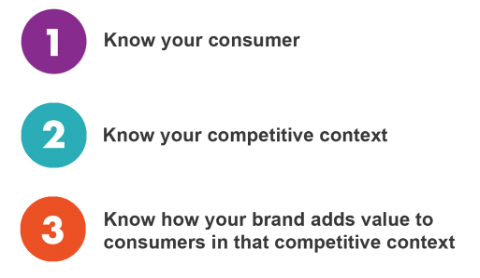
A simple exercise that teams can use to consider and articulate the market that their brand best competes in, is the “Big Box, Little Box” Model.

In this model, teams define the market, or “Little Box” that they believe their brand currently operates in, and what benefits they distinctly deliver to that market. Next, the team considers a broader market definition, the “Big Box”, to understand who is in the brand’s expanded list of competitors and what benefits their product could distinctly deliver in that broader context. By doing this exercise, the team broadens their view of who they are truly competing with and where they can source volume. This helps teams reframe how they present their brand and its ownable benefits to the world. i.e., the brand positioning, which in turn, impacts future renovation, innovation, and communication efforts.
Trending
Do customers want to ‘hire’ your product?
A team that manages a coffee brand might define their “Little Box” as the Coffee category. In that competitive context, the team will likely focus on functional coffee benefits such as richest flavor or best price, to compete with other coffee brands. But when they broadened their view of the competitive context to the “Big Box”, they might find that they are competing with the broader ‘caffeinated beverage’ market. In this context, the key benefits that the team may focus on to differentiate and compete with caffeinated sodas and energy drinks would be things like “warmth, comfort, and enabling your morning ritual.”
The big box, little box model allows teams to…
Discover who they are truly competing with
Reframe their brand strengths within the broader, and likely more accurate, competitive context
Identify which brand benefits are most ownable and distinctive vs. the competitive set
Reconsider who their target consumer is and how to position the brand to meet the needs of this larger consumer target group
Our experts can…
Facilitate a Big Box/Little Box exercise with your team
Execute a qualitative exploration to understand where your brand truly competes
Execute an Attitude and Usage (A&U) study to quantify which competitive products/categories are true competitors
Facilitate a workshop, using the learning above, to rethink and redefine brand strategy
Contact us at Contact@SIVOInsights.com for more information and next steps.
Before we experienced a worldwide pandemic and the Great Resignation, employers knew how to keep and retain talent. The focus was on providing work-life balance, exciting roles, improved technology, and better onboarding and training. In this new age, people are requesting flexible work schedules and locations. A report by the Future Forum, a group within Slack Technologies Inc, found that “95% of employees want flexible schedules and 78% want flexible locations.”
While not having to stick to a fixed 9-5 schedule and the ability to work from anywhere can be helpful to workers, employers need to dig deeper to understand how this will play out. These new ways of working come with drawbacks that can sneak up and drag down employee satisfaction and morale.


Because the boundaries aren’t as firm as they once were. We used to have a built-in transition with the commute to and from work. Many of us no longer have that physical and mental transition that ends work time and starts home time.

comes from being online all day, in virtual meetings, without truly interacting or collaborating with people face-to-face. Gone are the spontaneous “water cooler chats” and the conference room banter that happens before and after meetings.

If you find yourself talking to your dog or cat throughout the day, you are not alone. Working from home can create feelings of loneliness and isolation, as people find themselves rarely needing to leave their home/work office. This can be especially true if you started a job during the pandemic and you have never met your co-workers or manager in-person.

Many companies are incorporating new approaches to support employees in adjusting to flexible schedules and locations, such as:
If you haven’t listened to your employees recently, now is the time. We can help you and your organization understand what employees REALLY want, and how to help them achieve the balance they crave in this new world we are navigating.
With SIVO’s Organizational Intelligence Solution, we dig deep via employee interviews and group discussions to understand the challenges and engagement of the workforce. We facilitate leaders in the development of strategies and solutions to help employees cope with the “side effects” that come with flexible work schedules and remote work environments.
Trending

Every business has customers, but how well they know their customers is another question. In a recent Harvard Business Review blog, Peter Merholz explains that many large companies lose that vital interaction with their customers as their business begins to grow.
“Business cannot exist without customers, so it’s sadly ironic that many, if not most, businesses, actually understand so little about them,” says Merholz. “In order to become customer experience-driven, you need to go beyond who your customers are, and understand what they do.”
While it may feel tempting to place your customers into simple, definable categories, Merholz urges companies to dig deeper and understand their customers as real people living in a messy, complicated world. What does that mean for your company? It means going beyond the high-level data and seeking to understand and appreciate your customer’s behavior and true motivation.
Trending
Do customers want to ‘hire’ your product?
Through SIVO On Demand Talent or with SIVO custom qualitative research, our clients uncover the underlying motivations behind their customer’s unique behavior. With SIVO On Demand Talent, we have storytellers who mine existing research to bring our clients’ customers to life. And, we ensure the next phase of research fills a customer knowledge gap, extending our clients’ research budgets. With SIVO custom research, our clients tap into valuable customer insights through approaches like In-Store Intercepts, Shop-Alongs, and Ethnographic research, to gain clear, in-depth analysis of their customer in the context of their daily lives.
How well do you know your customer? Maybe it’s time to take a deeper look…
Contact us at Contact@SIVOInsights.com for more information and next steps.
When you read the news these days, regarding women leaving the workforce, the outlook and reality seem bleak. According to the Wall Street Journal,
“Due to challenges created by the COVID-19 crisis, more than 1-in-4 women are considering downshifting their careers or leaving the workforce completely.”
The White House Fact Sheet, April 21, 2021 also reported,
“There are now 3.7 million fewer women working than there were in February 2020, in large part because of the pandemic, eroding more than 30 years of progress in women’s labor force participation.”
Not only are these the facts, but this has been my reality. I have spent the last decade and a half building a business career in a traditional corporate setting, across Consumer-Packaged Goods companies that span from cereal to mascara. I’ve built a rich network of connections, and grown my skillset to span across sales, marketing, research, and innovation. I’ve invested in my career, but COVID-19 made me re-evaluate where my investment was most needed.
Trending
Do customers want to ‘hire’ your product?
When the lockdown hit in March of 2020, I added an entire workstream to my day job: manage childcare and distance learning for my two young children. I also lost my part-time nanny, my relief and respite, due to the pandemic. I did not know how I would stay afloat, deliver against my job’s requirements, while also ensuring that my kids got what they needed.
COVID realities created both unreliable childcare and unreliable school days. One exposure could turn any sense of schedule or order upside down. Some of those months went by in a blur. I recognized something had to give. I had to give. I had to make a change for myself and my family. I chose to leave my corporate job to explore something more sustainable for my life.
Fast forward to early spring 2021 and some of the facts and realities haven’t changed all that much. While the nation is becoming hopeful with relaxing Covid restrictions and rise in vaccinations, women have not as readily returned to the workforce. This year, I shifted to the gig economy and started a new career as a Research Strategy Consultant with SIVO’s On-Demand Talent team, a local women-owned agency that really understands what it looks like to do the work you love while also being present for your family.
For me SIVO has been a beacon, offering me a way to continue investing in my career without compromising my family, especially during a pandemic. SIVO is a woman owned and operated business founded on the belief that the world needs more people doing what they love. SIVO recognized 12 years ago there was an overflow of great talent that wanted to work but NEEDED flexibility, especially parents juggling family and childcare demands.
I’ve learned that part of making it ‘work’ as a working mom is to find the type of work that meets your needs. Workplace norms have pivoted to meet marketplace realities. My advice to women is to consider something that fits YOUR lifestyle priorities instead of the other way around.
I love being a part of an organization like SIVO, a company committed to redefining what work looks like. SIVO is helping companies work differently through their On Demand Talent (ODT) practice, which helps fill in resource gaps for short or longer-term engagements. Sometimes a company just needs an extra perspective on a special project, or someone to fill in during a parental leave.
SIVO’s ODT can provide the right talent – at the right time – so that companies can keep moving forward without disrupting workflows or putting additional strain on existing staff. I am currently on an ODT assignment and am loving the opportunity to work on unique business problems while, not only continuing to nurture my professional career, but also be the kind of mom I want to be for my family.
Are you curious what working differently looks like? – just ask. SIVO Insights can help you figure out the best path forward for you or your company to get the resources – and talent – you need. Schedule a discovery call today to get started.
We can all probably agree that we are living through one of the most disruptive events of our generation. With our worlds turned upside down, it comes as no surprise that the way people work in America has also vastly changed.
Just as news stories cropped up about 2021 being the year of the Great Resignation, other stories followed asking the question ‘where have all the workers gone?’ I’ve pondered this question as well, seeing the ‘short staffed’ signs everywhere I go and hearing from countless businesses about their struggle to retain talent.
The answer to what is causing the Great Resignation might lie in the reframing of the phenomenon. A smart colleague of mine, Vina Klein, astutely calls it the “Great Values Reset.” I really like that. It gives more insight to what is happening. People seem more attuned to their values when choosing how to live and how to work. At the start of the pandemic, we were sent home and we slowed down, we took stock, and we re-evaluated our lives. That experience impacted our choices in 2021 and beyond.
Trending
Do customers want to ‘hire’ your product?

Now enter the gig economy. The gig economy has always been around, but something interesting happened as a result of Covid-19. Gig workers represented around 35 percent of the U.S. workforce in 2020, up from between 14 and 20 percent in 2014. The number of companies that fully operate on gig work has increased by 85% since 2014. That growth has only accelerated as a result of Covid-19. As workers reset values and put more focus on having some control over their lives, employees are leaving the confines of a 9-5 and corporate bureaucracy. The gig economy is where they land, and SIVO Insights has the perfect launchpad for these workers.
I’m very fortunate to lead SIVO Insights On-Demand Talent. I’m passionate about helping my consumer insights consultants find fulfilling roles that match their skills and talent. I’m also very much “in the zone” when I’m able to help our clients fill a specific need on their team or find the right talent for a project. Matching our clients’ needs with SIVO’s On-Demand Talent experience and skills is the best part of my job.
SIVO Insights On-Demand Talent allows people to choose how they want to work. It provides the flexibility and work-life balance that comes with the gig economy. For companies, On Demand Talent delivers flexibility, too. Whether an organization is struggling to find and retain talent or is not in a position to commit to a full-time hire, tapping into SIVO On Demand Talent is a win-win!
Are you facing these challenges?
More workload and pipeline projects than your team can execute
Questioning how to keep saying “Yes” to internal stakeholders
Not enough time or resources to meet multiple requests for actionable insights from leadership, product development, marketing, or strategy
SIVO Insights On-Demand Talent™ is a solution for Insights talent needs for teams just like yours. We leverage our extensive pool of Insights professionals, with years of experience and expertise, to help you achieve your business objectives.
We recommend three key steps for evaluating and making the case internally for hiring contract Insights talent.

As workforce talent continues to evolve, there is no shortage of options, including interns, short or long-term contractors, contract-to-hire, or direct hire. Below, we highlight the advantages of Contract Talent vs. Full Time Hire:
Trending
Do customers want to ‘hire’ your product?

We have started engagements in as quickly as one week. To discuss your needs and how we can match the talent with the best expertise for quick solutions in your organization, visit SIVO Insights On-Demand Talent or email Brent.Budke@SIVOInsights.com.
Innovation requires seamless collaboration, agility, and the ability to pivot wisely and effectively. Timelines are tight and the right talent is critical to successfully manage the Insights process. SIVO’s On Demand Talent™ team recently provided a Consumer Insights Innovation Lead for Betsy Frost, Chief Revenue Officer at DRY Soda Company.

DRY Soda needed a Consumer Insights expert to manage the First Moment of Truth (FMOT) consumer learning for a new product launch, DRY Botanical Bitters & Soda, a ready-to-drink non-alcoholic cocktail with zero sugar.
“…it felt like SIVO was a member of our team.”
From the get-go, the SIVO’s talent creatively leveraged DRY Soda’s internal assets and owned social media to recruit the right consumers for quick-turnaround learning. Timelines and budgets were priorities, with no room for missteps. When supply chain complexities forced an immediate change in launch plans, the team worked smartly and effectively to pivot from cans to bottles in a record 15 days. Navigating a plethora of moving parts, including new package design, messaging, team alignment, and consumer feedback demanded an experienced team to pull it off successfully!
Do customers want to ‘hire’ your product?
During Consumer Research, Frost was thrilled to listen, participate and ultimately make the right real-time decisions from an outside vantage point rather than having to lead and facilitate herself.
Frost said, “You made it super easy and streamlined for me…it felt like SIVO was a member of our team.”
To learn more about the DRY Soda story and line of products available, visit drinkdry. Check out this new product: DRY Botanical Bitters & Soda!
You can Shop Now or click the ‘Find Dry’ link to leverage the unique geo-locator. It allows you to buy online or from the store front retailer of your choice. This shoppable platform is powered by Pear Commerce technology.
SIVO Insights On-Demand Talent provides the right talent for your business needs; it is NOT a one size fits all model. What talent do you need to immediately impact YOUR business? Email Brent Budke to successfully match the right talent.
Are you curious what working differently looks like? – just ask. SIVO Insights can help you figure out the best path forward for you or your company to get the resources – and talent – you need. Schedule a discovery call today to get started.
Today I am sharing useful tips for successfully executing virtual consumer conversations. They center around being human: acting in a genuine, respectful way and establishing trust.
Include criteria for having a stable Wi-Fi connection and familiarity with the tech platform being used. If the platform is new to participants, ensure you build in time for set up and practice before the interview to increase their comfort level.
If your study involves thoughtful writing exercise(s), make sure recruiting criteria have a written articulation component so they are not surprised by the type of communication that is expected of them.
Tip #2: Set Clear Expectations So There are No Surprises
The more participants know ahead of time, the more comfortable they will feel entering the discussion and the more open they tend to be. In addition to the basics, make sure:
Participants know what will happen during the interview. For example, is it a one-on-one conversation, or will others observe? Will you be sitting stationary in front of the camera or taking a ‘field trip’ to their pantry or garage?
What should they wear? (most ask…encourage comfort unless it is part of the research). Should their phone be on silent? (yes). Is it ok to have water or coffee? (yes, you want them to be comfortable), but please no meals unless it is an eating experience! Do they need to make arrangements for kids and pets so they are not distracted? (yes, unless they are part of the conversation). For mobile missions, no driving while participating (yes, this has happened!).
For online consumer behavior research to be most effective, participants are advised to log on five minutes before the scheduled interview time, so no time is wasted in setting up.
People are able to have a quiet place to conduct the interview to avoid potential inside or outside distractions.
Trending Online Consumer Research Article:
Do customers want to ‘hire’ your product?
When part of an online consumer research panel, it's important to “introduce” yourself via email and provide a picture so participants know whom to expect on the other end of the screen. Communicate how excited you are for the conversation, so they feel their input is valued before you even begin.
Log in early so you are there before the participant, smiling and welcoming as they enter the interview.
Minimize your own distractions such as only having exactly what you need for the conversation open on your laptop (the worst is hearing the constant email ‘ding’ as you are leading a conversation…trust me).
Have and communicate a back-up plan should tech issues arise (they will) so the interview isn’t a bust.
Energy! The last interview of the day should feel like the first one. Build in enough mental breaks and move from behind your screen to get some fresh air. Coffee helps too.
Life happens. Allow for tech issues, dogs barking, doorbells ringing and kids interrupting because these things WILL happen. Be forgiving and empathetic. Explain it happens to the best of us and that you will be patient while they figure it out.
If it becomes too much or too long of a distraction, ask if participants need to reschedule for a time that may be better for them. A stressed person is not an open or insightful person.
Observing is still just as important as listening in producing those insightful golden nuggets. I recently led a one-on-one video interview with a man wearing an “Own the Moment” t-shirt. I thought it was relevant to our topic and used it as a way into the discussion. It led to some really insightful personal truths and informed the learning in a way that might not have if it wasn’t pursued.
Like every research method, there are benefits and trade-offs, but I am really enjoying and finding great success with virtual research, applying familiar principles with a human-inspired tech-twist. Please contact the SIVO team at Contact@SIVOInsights.com to discuss your research needs and if virtual may be the right approach for your needs!
What if you could gain access to the high-quality insights you need to uncover new opportunities and propel your team toward success?
SIVO collaborates with you to understand your most critical needs, then designs and executes best-in-class custom market research using modern research capabilities. We provide actionable consumer insights that align with your business goals.
SIVO also specializes in Organizational Intelligence, Market Intelligence, and On Demand Talent. Individually and collectively, we use our qualitative, quantitative, and facilitation capabilities to deliver actionable learning.
By Cindy Blackstock
We’ve all hired someone to complete a task or a job for us. For example, if your lawn needs to be mowed – you can hire someone to mow it. Seems simple, doesn’t it? But have you ever asked that question about the products or services you work with? Do you know what “job” your customers need done, that is causing them to “hire” your product or service?
Customer needs are often less clear than ‘your lawn needs to be mowed.’ Identifying customer needs or “jobs to be done” is an intentional exercise where we must listen, observe and expertly question customers to uncover.
Jobs Theory reframes our relationship with customers, making them the center of our focus. While conventional marketing tends to focus on brand and product benefits, Jobs Theory doesn't look internally at products and services but instead, looks externally, to expose the functional, social, and emotional jobs that explain why customers make the choices they do.

People don’t simply buy products or services; they bring them into their lives to fulfill a need. We call this need the ‘job’ they are trying to get done. When we discover why customers want to ‘hire’ products or services, we develop a customer-centric view, allowing brand teams to become empathetic to their customers' needs and wants.
Trending for SIVO: What Does a Remote Workforce Really Want? You Need to Dig Deeper to Find Out
A good Jobs to be Done Map becomes a framework that helps marketers figure out how to improve their products or innovate by developing new products and services in their industry or category, i.e., ‘where to play.’ It can be leveraged beyond a single initiative. It maps all the jobs that customers have for a particular occasion. For example, a Snacking JTBD Map includes all the jobs that customers have for the snacking occasion. A Financial Investment JTBD Map, includes all the jobs that customers have for investing their money. It lives on in your organization as a place to continually go back to for inspiration and focus. It provides:

Inspiration and guardrails for brand positioning, marketing messages, product innovation and renovation

A framework for capturing, defining, categorizing, and prioritizing customer needs

A common language and focus for the cross-functional team
There are several factors that influence customer behavior, including:
At SIVO, we help our clients uncover their customers’ jobs for a wide range of application opportunities. We design customized research that leads to a fully developed Jobs to be Done Map. Our approach focuses on uncovering the subconscious drivers of customer decision-making by understanding the underlying needs and true motivations.
In Part 2 of our Jobs series, we will share the keys to success for Jobs to be Done mapping along with some examples of how it comes to life. Until then, please reach out to discuss how we can help you to get your brand, product, or service hired.
Reach out to the SIVO team at Contact@SIVOInsights.com to discuss how we can develop a Jobs to be Done Map for your organization.

Here at SIVO, one of our targeted solutions to your business challenges is ethnographic research. But what exactly is ethnography research? And why do you need it? Let’s take a closer look.
Ethnography is a flexible, qualitative research method that can be adapted to fit different audiences, markets, learning objectives, and environments.
Ethnographers immerse themselves in the natural environment of their research participants (home/office), and then observe their behavior. They also conduct an intimate one-on-one interview (usually lasting around 2 hours in length) with the respondent, where they learn about the life, values, beliefs, and attitudes of the consumer. When you need to develop a deep understanding of your audience by hearing their stories and truly learning about their lives, an ethnography consultancy may be the right fit for your consumer research and insights needs.
Related Trending Ethnography Research:
Do customers want to ‘hire’ your product?
Because ethnography research is conducted in the comfort of the consumer’s home or workspace, valuable insight is shared in a more truthful and open manner as compared to focus group research settings.
This up close and personal observation is critical because ethnographers can both witness and understand what consumers actually do on a daily basis, versus what they say they do.
There is also an opportunity to interact with the family and friends of the participant, to gain a more complete picture of his/her life. Engagement on such a personal level creates the foundation for intimate and empathetic consumer learning, which could prove valuable to a brand for years to come.
In addition, videographers can capture the ethnographic interviews and key moments with research participants, such as pantry tours, product interactions, and family meals. This video footage can then be translated into a powerful highlight reel to share with your marketing, design, or sales teams; to build empathy and gain a better understanding of your consumers.
Ethnography research is the perfect research tool to help you understand your audience, their mindset, their daily experiences, and their relationship with your product/service.
If you want to know how to frame your brand message in order to connect effectively with consumers, an ethnography consultancy will help provide the insights you need to craft a clear message.
You can also recognize ways to improve your product/service, while spotting potential product innovation opportunities. Additionally, ethnography can help you answer questions about your competitor and their core audience, as well as reveal opportunities for differentiating your brand.
Ethnography provides a unique, crucial perspective on how your brand fits into the actual lives of your consumers. So, if you’re ready to tackle your business challenges and discover powerful insights that will help move your business forward, ethnography might just be the missing research tool you’ve been looking for.
We specialize in providing businesses with valuable insights through ethnographic research. Our team of experienced researchers has the skills and knowledge needed to conduct in-depth studies of your customers' behavior and preferences.
We use a variety of ethnographic research methods and our researchers are skilled at interpreting the data gathered through these methods and can provide you with actionable insights that you can use to improve your business.
We work closely with our clients to ensure that our research is tailored to their specific needs. Whether you are looking to develop a new product or service, improve your marketing strategies, or gain a deeper understanding of your customers, we can help.
Contact SIVO today to learn about our ethnographic research services and discover what ethnography can do for you.
SIVO Insights brings together research, talent, and intelligent technology to help organizations navigate complexity with confidence. Have a business challenge? Let's talk!
We bring together research, talent, and intelligent technology to help organizations navigate complexity with confidence