


By Julie Rose
“CEOs aren’t feeling the need to hoard labor as much as they once did. A quarterly survey of CEO confidence released on February 8, 2024, by The Conference Board, a think tank, shows 23% of CEOs expect to lay off workers in the next 12 months, up from 13% from the previous quarter.” *
With employee staffing constraints and cutbacks sweeping through many companies, business teams are feeling the pressure. So how does the work get done?
We know that business leaders continue to seek actionable insights to guide their decisions but there are fewer people and often not enough time to get it all done. Many insights teams are turning to fractional talent to fill staffing gaps. This provides the freedom to say “YES” to internal stakeholders, set strategies and take on new projects while not burning out the team or falling short on annual objectives.
As teams consider their staffing options, here are three easy steps for making the case for adding fractional resources.
Step 1 – Outline what issue you are solving.
Use information on hand to justify what the “current state” is costing you and the business.
Step 2 – Evaluate and select the right resource for your needs.
Workforce talent continues to evolve and there is no shortage of options, including interns, fractional talent, contract to hire, or permanent hire. Determining what’s best for you and your organization is key. When evaluating the right resource for your needs, there are a few key questions. Short vs. Long term? Trained vs. Untrained? Junior vs. Senior Level? Hours per week? Budget parameters?
Step 3 – Make the case to your internal stakeholders.
Finding the right talent with experience and selling the option internally might seem daunting. With the right solution, it is possible. Present your case to internal stakeholders by outlining the business need, presenting a tight range of staffing solutions, including the benefits of your recommended choice, and the associated cost and timing. You may also want to include the bios or resumes of the potential talent you are recommending.
If your evaluation in Step 2 supports contract or fractional talent as the optimal solution, below are a few additional resources from SIVO that can help.
Why Choose SIVO On Demand Talent for your Fractional Insights Talent Needs
SIVO On Demand Talent is here for you, with exceptional insights talent for fill-in roles or finite initiatives. You will experience the uniqueness of SIVO On Demand Talent through our Experience, Service and exceptional Talent!
Contact SIVO, Inc. at Contact@SIVOInsights.com to discuss how SIVO can help you make the case for fractional talent. Also, check out SIVO’s On Demand Talent Profiles to learn more about the many fractional Insights Professionals - from Insights Generalists to Research Specialists - that can be an asset to you and your team and help you meet your goals.
* Noted in a NerdWallet article, Will 2024 Be a Big Year for Layoffs? February 2024
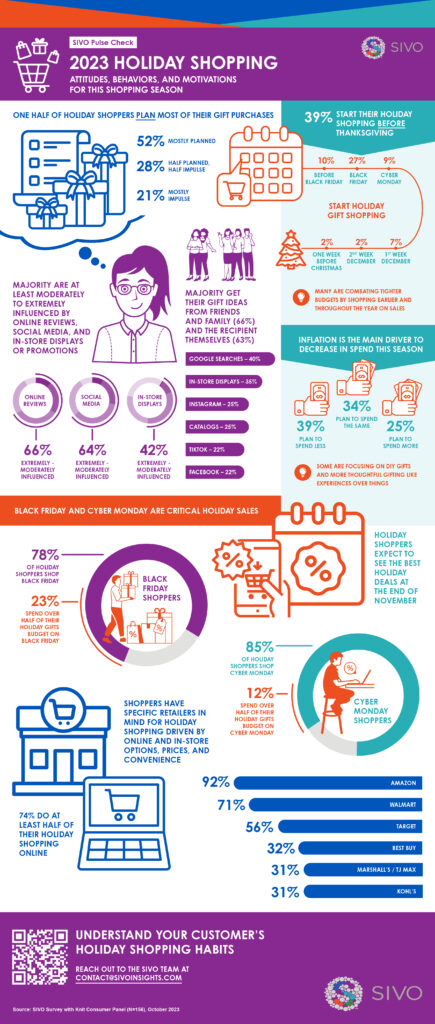
For many manufacturers and retailers, the holiday season can be a “make or break” time period for generating sales and achieving revenue goals. For this reason, it is critical to understand your customer’s holiday shopping attitudes, behaviors and motivations. This is SIVO’s strength. Through approaches like in-store shop-alongs, mobile missions, online communities and in-depth focus groups, SIVO can dig deep into understanding the mindset and behaviors of your target customers, while immersed in the holiday season. Now is the time to act! Let SIVO help you understand your holiday shoppers so you can anticipate their needs and preferences to… Win the Season!
By Julie Rose
In today’s blog, we take a break from our standard format and have a little fun imagining a utopian future for market research. Jump with us to 2029, will you? We think you’ll like it!
We’ve jumped in the time machine and 2029 is a new era for market research. Picture this: AI has taken the mundane, repetitive tasks off our hands, freeing insight professionals to focus on creatively connecting insights, telling compelling stories, formulating strategies, and influencing business decisions. Gone are the days of designing surveys from scratch, laboriously cleaning data, and spending weeks on synthesis. The research role has evolved into something greater—part strategist, part AI conductor, and part visionary. Welcome to the golden age of insights.
Synthetic Personas: A New Era of Consumer Insight
In 2029, traditional surveys are feeling as outdated as fax machines. AI-driven synthetic personas have completely changed the game. These AI-generated personas are lifelike, modeled using real consumer data and machine learning, simulating consumer behaviors, preferences, and even emotions with remarkable accuracy. They behave, react, and even feel like real people—without requiring self-reported data or human subjects.
The scalability is mind-blowing. Imagine running thousands of personalized conversations and “what-if” scenarios simultaneously, testing hypotheses, and gathering nuanced feedback in real time.
Additionally, the days of complicated recruitment challenges are gone. Synthetic personas have made it possible to engage with hard-to-reach populations and conduct large-scale research without any privacy concerns.
Multimodal Inputs & Emotional AI: Understanding Consumers on a Deeper Level
Remember when we relied on surveys, focus groups, and social scraping to understand consumer sentiment? By 2029, those methods feel like relics from a distant past. Today, AI uses multimodal inputs like text, video, voice, and even biometric data to give us an authentic view of consumer attitudes, beliefs, and emotions.
For example, emotional recognition tools track subtle cues like facial expressions, vocal tones, and physiological responses in real time. When testing a product or promotional materials, AI can measure a consumer's heart rate and stress levels, bridging the gap between what people say and what they truly feel. This deeper understanding enables brands to craft emotionally resonant products, services, and communications that genuinely connect with their audiences.
Synthetic Data: Privacy-Proof and Scalable Insights
Data privacy concerns used to be a major issue in research, but not anymore. By 2029, synthetic data—artificially generated datasets that mimic real-world data—has become a staple in marketing research. This allows us to test hypotheses, simulate consumer behaviors, and run detailed "what-if" scenarios on a large scale, all without compromising privacy as the analyses do not access any personal (human) data.
Unlike the randomly generated or hallucinated data that was an issue in the past, synthetic data is now created using sophisticated machine learning algorithms that extrapolate patterns from real data to generate highly accurate, privacy-safe datasets. This isn’t new—researchers have always synthesized data—but AI now makes it faster, more accurate, and scalable. As more data is collected and validated, synthetic data models in 2029 are more precise, enabling deeper insights while respecting privacy regulations.
Agent-to-Agent Collaboration: Adapted Research Management
Perhaps the most revolutionary change in 2029 is how AI helps market research teams manage entire research projects. The team has built and now manages digital agents—AI programs designed to mimic human decision-making—to handle the repetitive aspects of a research project. The team sets business and research objectives and high-level questions. From there, digital agents collaborate with one another to execute tasks, analyze data, and refine insights. These agents work tirelessly in the background, leaving the team free to focus on more creative and strategic aspects, like storytelling, providing actionable recommendations linked to the business context, and building client relationships.
This isn’t about replacing humans; it’s about empowering them. By automating the basic operational tasks, AI gives us more time to dream big and think creatively.
Driving Action & Outcomes: AI-Enhanced Storytelling
In 2029, AI is an essential partner in crafting compelling narratives from raw data. Gone are the days of manually structuring reports or laboring over visualizations. Today, AI systems instantly outline story arcs, recommend the best supporting data, and generate tailored presentations depending on the audience. With the guiding hand of Content Strategists, AI delivers high-level insights to C-Suite audiences and produces more detailed reports for technical teams.
The most exciting development? AI-powered immersive presentations. Using augmented and virtual reality, Research Strategists (with the support of Content Strategists) guide stakeholders through dynamic, interactive experiences, allowing them to explore insights in a hands-on way. This revolutionizes the presentation experience, making it more engaging and impactful than the static reports of the past. The result? Stakeholders leave every presentation engaged, informed, and ready to act.
Humane AI: A Future of Ethical, Mindful Collaboration
Back in 2024, many feared AI—worried about bias, transparency, and job security. But by 2029, those concerns have faded. Rigorous regulations ensure that AI systems are ethical, transparent, and fair. Continuous audits minimize bias and guarantee that AI tools uphold the highest standards of integrity.
Rather than replacing us, AI complements our skills. Researchers who embraced AI early on have found themselves thriving. Together, humans and AI form a powerful partnership, pushing the boundaries of what market research can achieve.
The Researcher’s Elevated Role: Creative, Strategic Visionaries
In 2029, our favorite part of being a researcher is the freedom to focus on what we love most: strategy, insights, and relationship-building. AI handles tedious, repetitive tasks, giving us the space to drive business impact in ways we never thought possible.
The role of the researcher has evolved. We’re no longer data processors or survey designers—we’re storytellers, strategists, and visionaries. AI enhances our work, allowing us to uncover insights faster, more accurately, and with greater depth than ever before.
Are You Ready for the Future?
The future of market research isn’t coming - it’s already here and getting better every day. At SIVO, we’re embracing this transformation with open arms, empowering our team and clients to thrive in this exciting new era. Together, we can unlock the full potential of AI and create a better, brighter future for our industry.
Are you ready to join us on this journey? Let’s build the future together. Contact us at Contact@SIVOInsights.com or visit SIVOInsights.com to schedule a discovery today.
What is a Consumer Target
At the foundation of all great marketing initiatives is a complete and deep understanding of the consumer target. The consumer target is a specific and detailed description of the type of person who has needs or desires that you believe can be served or helped with your products or services. Truly identifying and understanding the consumer target can inspire creative and innovative thinking to help grow your brand through new products, marketing campaigns, or promotions that fulfill their needs and wants.
Segmenting the Market to Identify Your Consumer Target
Teams must be focused and clear about who their consumer target is and is not. This consumer does not represent everyone that purchases your product or service.
A typical first step to identifying your consumer target is to segment the market you operate in. Market or consumer segmentation is a market research approach that allows you to divide the universe of potential consumers into smaller groups or segments based on their characteristics. The segments are composed of consumers who will respond similarly to marketing strategies because they have shared demographics, needs, interests, values and/or locations. Once the market has been segmented, an assessment is required to understand which segment of consumers offer the most potential for growth, i.e., which group is most likely to find value and be motivated by your business proposition and respond to your initiatives, across the 4Ps of product, placement, pricing, and promotion.
Building Knowledge About Your Consumer Target
While segmentation is a great first step in identifying your consumer target, it is only the beginning. Every day you will be faced with making business decisions based on what you know about your consumer target and how you think they will respond to your actions. You should have basic knowledge covering five key areas:
Answering these questions requires a combination of sales data analyses, quantitative assessments such as, attitude and usage studies plus, qualitative, or observational techniques such as, in-depth interviews, in-store shop-alongs, and in-home ethnographic research to fully immerse in how your consumer target thinks, lives and shops. Oftentimes, this is referred to as developing the consumer target persona.
Building Consumer Empathy
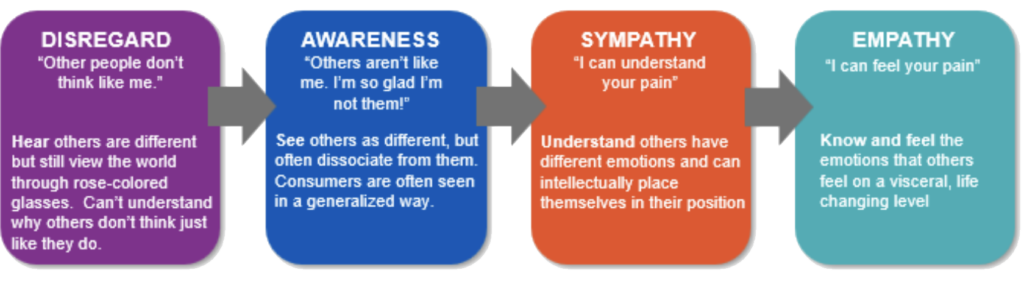
The ultimate goal is to build empathy for and intuition about your consumer target. You need knowledge to understand what is in their head (how they think) and empathy to understand what is in their hearts (how they feel and their underlying motivations). Most of the time, you yourself are not the target consumers so you must spend time with them to truly understand their lives, values, beliefs, and behaviors. The goal should be to move through the following spectrum to be able to genuinely empathize with your consumer target.
How to Get to Empathy for Your Consumer Target
Building empathy is different from conducting a typical market research study. Market research is designed to answer specific business questions by getting feedback and perspective from consumers. For instance, you might conduct market research to understand how your product compares to the competition or what product varieties you should launch next.
An empathy trek is solely designed to gain better understanding of who your consumer target is. It is a listening and observation exercise, designed to help you “walk in their shoes” and “feel what they feel.” In an empathy trek, you’ll explore how your consumer target lives, what they value, believe and how they behave. By building consumer empathy, you will build your intuition about them, and are able to make business decisions on their behalf.
The Value of Truly Knowing Your Consumer Target
The value of building empathy for your consumer target is tremendous. Specifically, it can:
Your Source for Expert Consumer Insights
As you and your team learn more about your consumer, your marketing and innovation ideas will get more targeted at serving their needs, which will in turn, make them more successful. Ideally, you will be able to reach them at key moments of truth, physically or digitally with personalized content that improves the brand experience and loyalty.
At SIVO, we are dedicated to helping our clients identify and understand their consumer target’s perceptions, needs, beliefs, and behaviors. We create learning plans that will help you gain valuable insights by applying the right approaches to identify your market segments, consumer target persona and to build consumer empathy for you and your team.
Contact us via our website form or email us at Contact@SIVOInsights.com today to schedule a discovery call!
SIVO Insights brings together research, talent, and intelligent technology to help organizations navigate complexity with confidence. Have a business challenge? Let's talk!
We bring together research, talent, and intelligent technology to help organizations navigate complexity with confidence