
By Julie Rose
Now more than ever, it’s crucial to balance future readiness with the demands of today.
The future isn’t distant. It’s already here and unfolding in ways most can’t imagine. If you look closely, the signs of what's to come are everywhere. Technology, consumer preferences, and industry landscapes are evolving at an unprecedented pace.
Yet, many still expect gradual change, a slow evolution of today’s norms. The reality is different. The future is coming faster and with more disruption than we’ve ever experienced before. To remain competitive, companies must adopt a future readiness mindset.
More Different Than Ever Before
In the next 20 years, society will change more than it has in the past 300 years. We live in the Technology Era, where things evolve exponentially. This is hard to grasp because we’re wired to think in linear steps, not exponential leaps.
For example, the stepwise expansion of grocery store refrigerated sections to include fresh snacks and functional beverages and grab & go meals was a slow, predictable evolution. But the rise of Instacart, which recognized paradigm shifts in eCommerce, the gig economy, and rideshare platforms was a significant leap that changed grocery shopping substantially. Today, 25% of groceries are bought through delivery services like Instacart.
While we easily project near-term change, we vastly underestimate long-term transformations.
Take TikTok, Zoom, Peloton, Alexa, Airbnb, and Tesla—none existed 5 to 10 years ago, yet they are now embedded in our daily lives, and disrupted industries almost overnight.
How will your industry, competitors, and consumers transform in the next decade?
The Power of Exponential Change
Exponential technological growth, driven by Moore’s Law, is driven by the power and capabilities of technology doubling every two years, if not faster. This exponential curve is almost impossible for our linear human brains to understand. Let’s demonstrate:
Imagine folding a giant piece of notebook paper in half. Now fold it again and again until you’ve folded it 42 times. How tall would that folded tower of paper be? Four inches? Four feet? Four yards?
Wrong. It would stretch all the way to the moon (0.004 inches x 242 ≈ 240,000 miles)!
This is the power of exponential growth—small changes compound quickly, creating massive impacts. Companies and individuals who can think exponentially, recognizing and preparing for the transformational changes on the horizon, will thrive in a future that looks radically different from today.
How to Prepare for Tomorrow, Today
Here are four critical steps to get your organization ready for the era of exponential change:
1. Narrow Your Lens
With endless opportunities (and challenges) on the horizon, it’s easy to lose focus. Which do you want to solve? Where do you want to start? Narrow your focus to areas where you can make the biggest impact. Rather than trying to chase every opportunity, focus on solving the problems that align with your strengths and strategic goals. Successful companies of the future will be those that zero in on the right opportunities, rather than trying to cover too much ground (or worse, choosing to stand still).
You don’t have to be Amazon, Tesla or Google X—but you better not be Blockbuster.
2. Notice & Anticipate
The future doesn’t usually arrive in the form of today’s familiar faces. Instead, it comes from the edges. Netflix didn’t resemble its current form in its early years, nor did Facebook. To see the signals of change, look beyond your immediate competition or traditional industry players. Explore the fringes of culture, markets, and technology. The future often looks weird before it goes mainstream—initially awkward, niche, and impractical—until it’s not.
What are you doing to discover tomorrow’s signals today?
3. Seek a Catalyst
Driving disruptive change is tough, especially for established organizations. That’s why you need innovation catalysts—people who have the rare ability to get things moving and drive change. These are the people who can activate ideas by building trust, challenging assumptions, and breaking through organizational inertia. If you have them on your team, nurture and empower them. If not, hire them. Additionally, reevaluate your network. Seek and develop deep partnerships that offer 1+1=3 potential.
Do you have a catalyst on your roster? Are your partners driving exponential potential?
4. Practice
Focus, anticipation, and catalysts alone won’t ensure success. You must also create the time and space to “rehearse the future”. Build experimentation into daily routines and make future discussions a core part of company culture. You still need to run day-to-day operations, but by weaving future preparation into daily practice, you’ll be better prepared when disruption hits. World class innovation companies like 3M, NASA and Nike create space, ring-fence funds and reward risk-taking and experimentation.
What systems and norms do you have in place to enable learning about your potential futures?
SIVO is Your Future Readiness Co-Pilot
While tomorrow’s marketplace will look very different from today’s, understanding human needs, beliefs, and behaviors will remain critical. At SIVO, our Custom Research and Growth Framework solutions will highlight tomorrow’s opportunities, and our On Demand Talent network offers “future-ready” experts ready to provide fractional support tailored to your needs. Additionally, we are “rehearsing the future” by actively using and experimenting with AI tools that support our researchers in uncovering insights and optimizing efficiency.
Contact us at Contact@SIVOInsights.com or visit SIVO's Website to hear more about our investigation or to schedule a discovery call. Let’s embrace the future together!
Before we experienced a worldwide pandemic and the Great Resignation, employers knew how to keep and retain talent. The focus was on providing work-life balance, exciting roles, improved technology, and better onboarding and training. In this new age, people are requesting flexible work schedules and locations. A report by the Future Forum, a group within Slack Technologies Inc, found that “95% of employees want flexible schedules and 78% want flexible locations.”
While not having to stick to a fixed 9-5 schedule and the ability to work from anywhere can be helpful to workers, employers need to dig deeper to understand how this will play out. These new ways of working come with drawbacks that can sneak up and drag down employee satisfaction and morale.

Because the boundaries aren’t as firm as they once were. We used to have a built-in transition with the commute to and from work. Many of us no longer have that physical and mental transition that ends work time and starts home time.

comes from being online all day, in virtual meetings, without truly interacting or collaborating with people face-to-face. Gone are the spontaneous “water cooler chats” and the conference room banter that happens before and after meetings.

If you find yourself talking to your dog or cat throughout the day, you are not alone. Working from home can create feelings of loneliness and isolation, as people find themselves rarely needing to leave their home/work office. This can be especially true if you started a job during the pandemic and you have never met your co-workers or manager in-person.

Many companies are incorporating new approaches to support employees in adjusting to flexible schedules and locations, such as:
If you haven’t listened to your employees recently, now is the time. We can help you and your organization understand what employees REALLY want, and how to help them achieve the balance they crave in this new world we are navigating.
With SIVO’s Organizational Intelligence Solution, we dig deep via employee interviews and group discussions to understand the challenges and engagement of the workforce. We facilitate leaders in the development of strategies and solutions to help employees cope with the “side effects” that come with flexible work schedules and remote work environments.
Trending
In today’s fast-paced world of AI-powered dashboards, real-time metrics, and instant feedback loops, businesses are flooded with data. But despite this access to information, many teams are still struggling to truly understand their consumers.
Why? Because understanding doesn’t come from data points alone. It comes from empathy – the ability to see the world through your consumers’ eyes.
Empathy is not just a soft skill. In a business context, empathy for your consumer is a strategic asset. And when used intentionally, it becomes a competitive differentiator that can unlock sharper decisions, faster innovation, and stronger brand resonance.
Empathy in a business context goes beyond surface understanding: It’s the process of cognitively and emotionally connecting with your consumers’ experiences, motivations, and needs.
Consumer empathy allows teams to:
And most importantly: it allows your team to move beyond assumptions and act with confidence.
What we see most notably, with the rise of AI, more and more executive teams are pushing for faster, leaner decision-making. But without a connection to real-world consumer behavior, speed risks becoming shallow, and very costly. From an insights perspective, developing empathy within organizations and training teams isn’t a nice-to-have or a luxury – it’s a necessity.
And these are just some examples. Empathy fuels smarter decisions at every level of the business, in all departments.
Whether you’re a CMO rethinking brand positioning or an Insights Director building your learning plans, here are some key tools to bring empathy into strategy:
Spending time in your consumers’ real environments (their homes, their workplace, neighborhood stores, their daily routines, even in their cars) allows you to uncover insights that would never surface in a focus group or controlled environment. Watch for routines, artifacts, interactions, and decision-making moments. What feels normal to them might be revealing for your team.
Ethnographic interviews are perfect to use when exploring new segments, refining product strategy, or understanding how a category fits into everyday life.
Understanding how people actually make choices at shelf (or online) tells you more than any survey can. What stops them? What persuades them? How do they navigate the retail space? How does your product show up relative to your competitors? Shop-Alongs and Path to Purchase Observations are perfect when optimizing in-store experience, packaging, or online conversion strategy.
These immersive, multi-day learning experiences are designed to help teams step into the shoes of their consumers – literally. Whether it’s joining farmers on their land or shadowing a parent on a morning routine, empathy treks bring brand teams (and senior leaders) closer to the emotional context that drives decisions. It’s a common tool to aligning cross-functional teams, inspiring innovation, or uncovering core brand truths.
Mobile mission software, accessed through smart phones, gives you visibility into your consumers’ world in real time or over time. From what they eat and wear to how they talk about brands, these tools capture lived experiences in context, without disrupting them. Digital diaries are perfect for when businesses are looking to understand rituals, routines, and the evolving emotional process of the consumer journey.
Empathy doesn’t end with the research. In fact, it’s only the beginning, and companies should strive to embed it in their day-to-day businesses. But how? That’s where tools like Insight Activation Sessions come in, to help teams translate empathy into action by reframing findings as strategic questions, idea starters, or business moves. A perfect move to embedding insights into planning cycles or cross-functional decision-making, for long-term results.
At SIVO, we love helping clients across industries uncover powerful insights through empathy-driven methods. Here are just a few examples of past cases:
A leading electronics retailer struggled to connect with their consumers – their messaging felt clinical and cold. By stepping into the real lives of their target market, in their own homes, we uncovered the emotional language that truly resonated. The result? Clear direction on positioning and communication strategies – and a renewed path to success in a challenging category.
A global beverage brand was losing relevance across key consumption occasions. Through immersive virtual ethnography, we helped them see how emotions, rituals, and motivations shaped beverage choice across six countries. This empathy-powered understanding led to sharper messaging and inspired marketing activation across core segments.
An electronics brand expanding globally needed to understand what truly drives consumer decisions – but sales data alone weren’t cutting it. Through ethnographic interviews and in-store observations across multiple countries, we uncovered key journey moments that shaped how and why people buy. The insights directly informed their brand growth strategy.
A recreational vehicle company wanted to identify new opportunities for innovation and product improvement efforts – but needed to understand the deeper feelings associated with their utility vehicles. The SIVO and client team spent quality time with farmers and hunters on their properties, riding in their vehicles to see and feel how these vehicles integrated into their consumers’ lives, their farming businesses, and leisure time.
Empathy isn't just a buzzword or about "feeling good" – it's about making better decisions, for you, your company, and your consumers. When you understand the world your consumers live in, you can make decisions with more clarity, alignment, and confidence.
Ready to move from unaware to empathetic?
Let’s explore how empathy can drive better decisions across your company!
Across industries, brands attempt to access and leverage data to unlock stronger sales and business growth. Your team can bring a wealth of experience and expertise to initiatives, but getting feedback from the people who engage with the product produces better outcomes. Below, we’ll answer the questions: what are consumer insights? Why are consumer insights important? And What is the best way to get consumer insights for my business?
First thing’s first, what are consumer insights? Consumer insights are the underlying motivations or needs that make a consumer behave a certain way. Insights professionals work to understand consumer attitudes, requirements, desires and behaviors to uncover insights that can then guide brand building, portfolio and marketing communications efforts. Many organizations gather data from their consumers, but the real depth of insight comes in asking the right questions and getting the full picture from consumers. Insights gleaned from studying and connecting with your consumers can inform nearly every aspect of your business’ path to growth.
So, how do you get consumer insights? Businesses can get consumer insights in several ways. The correct method for your team depends largely the business question, as well as the industry and market you serve. For example, organizations may capture qualitative data via focus groups, in-depth interviews, and user immersions to identify the nuances in consumer values and opinions.
Meanwhile, quantitative data like path-to-purchase, product testing, and volumetric forecasting can help teams validate consumer interest and behaviors and build confidence in decision-making and actions. Consumer insights experts can gather this information in a number of ways. See some of the most effective consumer insight solutions and techniques below:
Qualitative Consumer Insights
Ethnographies
In-Depth Interviews
Focus Groups
Shopalongs
Shopper Intercepts
Mobile Missions
Online Bulletin Boards
Fishbowls
Agile Sprints
Rapid Refinement
Communication Checks
User Immersions
In-Home Usage
Interactive User Experience
Jobs to Be Done
Quantitative Consumer Insights
Segmentation
Attitude and Usage
Path-to-Purchase
Tracking Testing / Screening
Brand Positioning
Brand Architecture
Product Testing
Creative Testing
Opinion Polling
Now that we know what they are, why are consumer insights important? Essentially, consumer insights remove some of the speculation from your business decisions and actions. It provides actionable answers to what consumers think about your brand, your category, and your products or services. Once you receive those insights, you can take it and run. It’s the fuel that ignites new product or service innovation and optimization, brand experiences and communications. At a higher level, it gives your business access to an entirely new perspective within your consumer market. Consumer insights give you a more holistic understanding of the consumer target audience you want to connect with, allowing you to gain a competitive edge within your industry.
So, why is consumer insight important? There are several reasons growing brands invest in these solutions to drive growth and gain a competitive edge. See why more and more businesses focus on obtaining consumer insights for their strategies below:
The best business strategies have data-backed insights behind them. Consumer insights allow you to identify a “why” to inform and support your business initiatives. The same goes for your brand.
Understanding what people truly believe about your brand can transform marketing strategies. Today, it is important to know who your customers are, what they do, what they value, and why it matters. The best way to answer those questions is to identify your consumers and start a dialogue to better understand them. This dialogue and the insights that come from it allows your business to bring more value to the people you serve. It all leads to better customer experiences and a stronger return on investment.

Every product or service has areas for improvement. Who are the best people to provide that feedback? The individuals who purchase and use them. Getting honest opinions on your current portfolio helps you identify the best places for optimization. You can spot holes in the market and create solutions that fill consumers' unmet needs. Some of the best product ideas and business innovation can come straight from your customers.
It all starts with empathy. Providing enhanced, consumer-focused products and services can only benefit brand loyalty. Brands need to continuously check in with their customers to ensure they have positive brand experiences and identify new ways to delight them. As mentioned above, your products/services can consistently improve to meet the needs of your customer base. Ultimately, this all works toward a stronger relationship with your audience to gain ongoing loyalty. That goes a long way when they are choosing between brands.
How can consumer insights fuel your marketing campaign? Speaking directly to your target audience members creates more nuance and specificity in your consumer-first marketing campaigns. Every engagement in your advertising and beyond should prioritize your consumer. Understanding their values and preferences deeply allows you to speak to them more directly and effectively. If you’re on the journey of building your brand or audience-based marketing (AMB) strategy, these insights provide a path toward successful campaigns that move the needle and influence consumer behavior.

What is your customer’s experience with your brand? Are there features that they like or dislike? Sometimes small things go unseen by marketers, but small details can leave a lasting impression on consumers. Whether it’s digital user journeys, messaging, or customer service conversations, it’s invaluable to hear, understand and react to what people think when they engage with your brand, products, and representatives.
If your organization is wondering how to get consumer insights, the best path is through a specialized consumer insights company. SIVO is a global insights and strategy firm specializing in understanding people and their needs and beliefs that drive behavior. We partner with brands to answer key questions that guide strategies and fuel growth. First, we schedule a discovery meeting, where we ask your stakeholders and subject matter experts key questions about your business and needs. Then, we design a custom research approach that aligns with those requirements. From the data gathered, we identify key insights that inform your decisions and drive business growth. Our experts act as your ongoing partner, helping you access your consumers and interpret the research every step of the way.
Ready to get meaningful consumer insights to unlock your next business and brand strategy? SIVO provides full-service custom consumer research and experiences for business across industries. Whether you need consumer insights, organizational intelligence, market and competitive intelligence, or on-demand talent, we empower organizations to get the most of their business, marketing, and brand building efforts to better achieve their goals. Contact SIVO today to get started.
By Julie Rose
As your fiscal year is coming to a close, new questions and challenges can arise as you finalize spending on this year’s budget:
SIVO Insights On Demand Talent™ Can Help
SIVO’s On Demand Talent is a great solution for Insights Professionals and Teams facing the year-end crunch – with more initiatives than bandwidth to get it all done. We leverage our extensive pool of fractional Insights Talent, with years of experience and expertise, to help you achieve your business objectives.
We recommend three key steps for evaluating and making the case internally for hiring contract Insights talent.
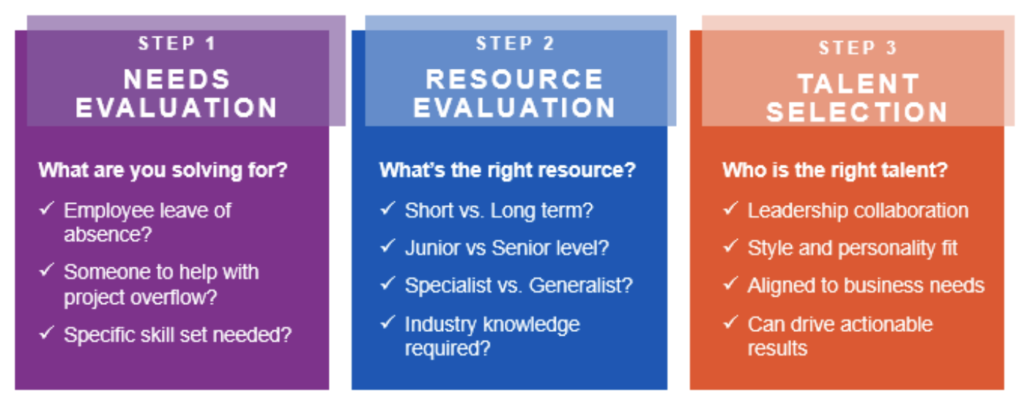
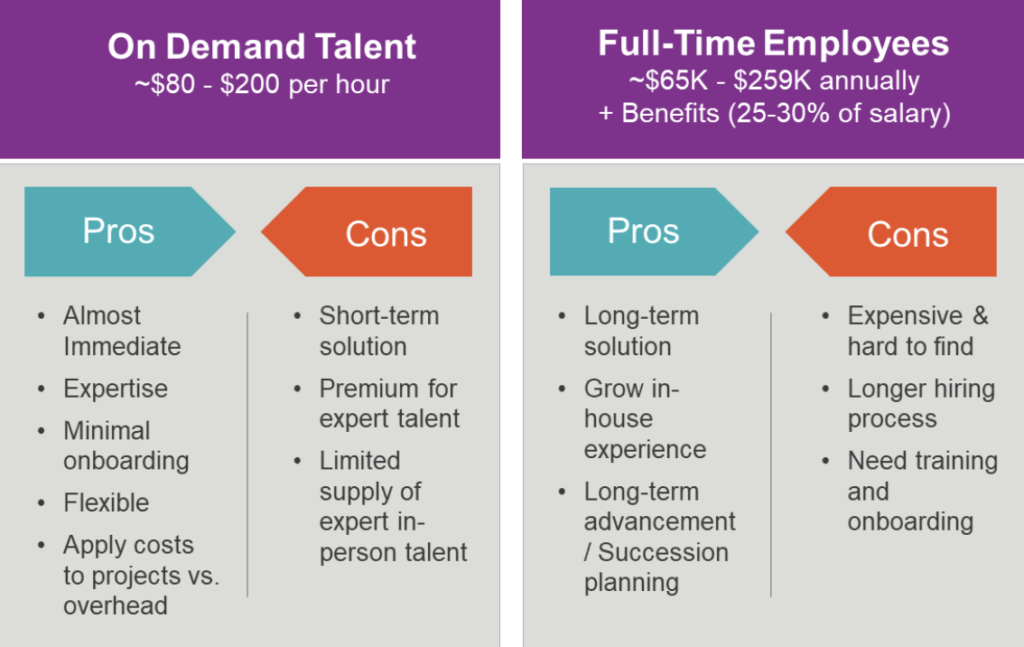
As workforce talent continues to evolve, there is no shortage of options, including interns, short or long-term contractors, contract-to-hire, or direct hire. Below, we highlight the advantages of On Demand Contract Talent vs. a Full-Time Hire:
Prove the Need for Incremental Resources
Some of our clients have struggled to make the case to their leaders for permanent incremental headcount. Instead, they started with SIVO’s On Demand Talent to show value to the business. This step helped them demonstrate the benefit of having additional resources. Let SIVO help you get the additional headcount you need in 2024.
Get Expert Consumer Insights with SIVO
We have started ODT engagements in as fast as one week. To discuss your needs and how we can match the talent with the best expertise for quick solutions in your organization, visit SIVO On Demand Talent or email Contact@SIVOInsights.com.
SIVO Insights brings together research, talent, and intelligent technology to help organizations navigate complexity with confidence. Have a business challenge? Let's talk!
We bring together research, talent, and intelligent technology to help organizations navigate complexity with confidence